
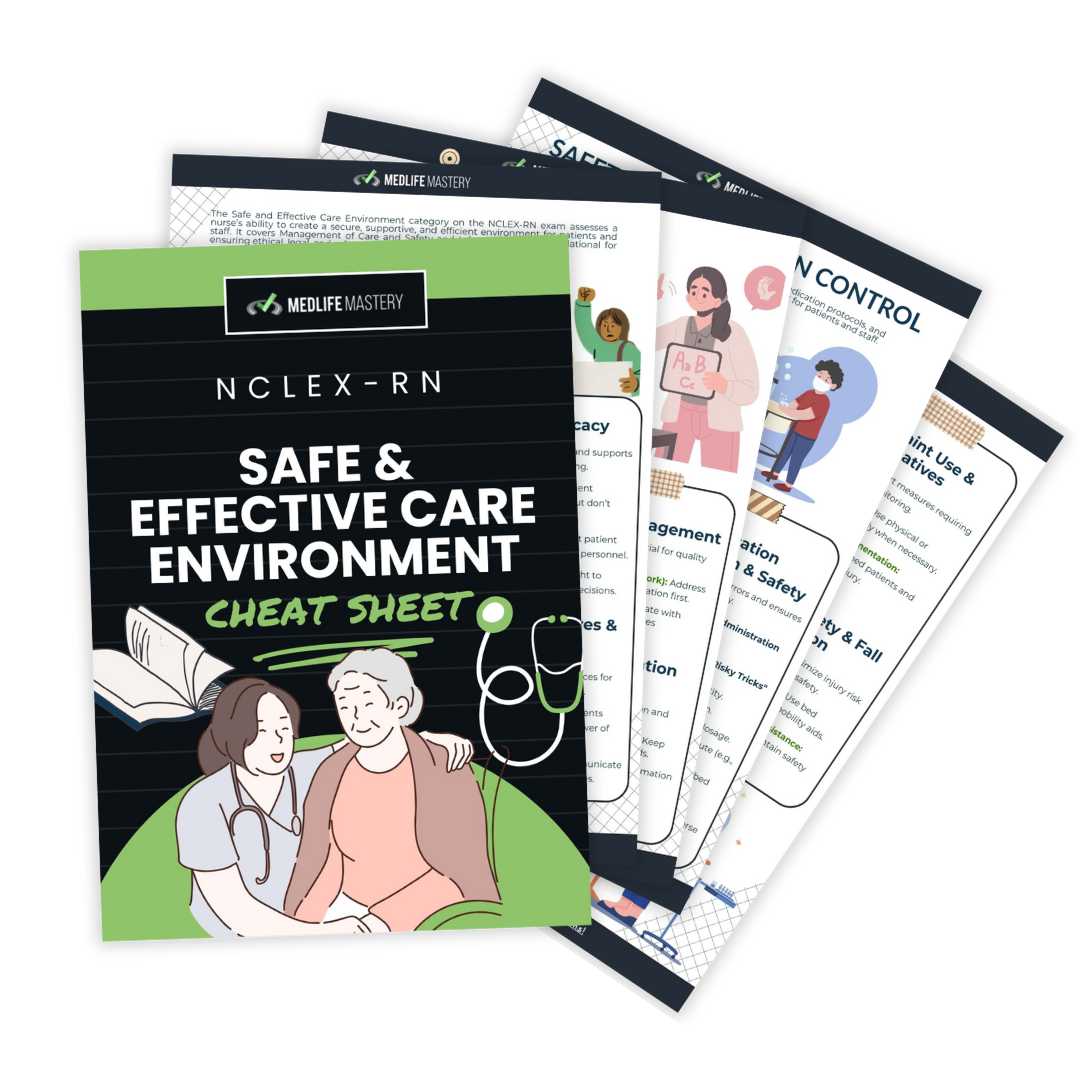
Safe and Effective Care Environment RN Cheat Sheet - Free PDF Download
Every nurse who preps for the NCLEX-RN knows the stress that comes with covering all the exam’s corners. One area you cannot skip is the Safe and Effective Care Environment. This isn’t just about book knowledge.
This is where your readiness to be a real nurse gets tested. Let’s break it down so you feel confident not just on exam day, but when it’s time to step into a clinical setting and care for real patients.
Why Safe and Effective Care Environment Matters
Why is this such a huge deal? Because about 21% of the NCLEX-RN focuses on it, and for good reason. It covers patient safety, legal guidelines, and how you make sure a care setting supports everyone’s well-being.
You could say this part of the exam asks, “Do you know how to keep your patients safe in real life, not just in theory?” It’s where your role goes beyond following steps. You make the place safe, you protect rights, and you ensure patients feel supported.
This shapes the way you provide care that doesn’t just treat conditions but supports patients as human beings. It means going beyond just seeing patients as names on a chart and understanding how to give them safe, comprehensive care.
Main Areas Covered Under Safe and Effective Care Environment
Let's break down the core areas the Safe and Effective Care Environment covers on the NCLEX-RN. Each area checks if you know how to keep patients safe, coordinate care, and prevent risks.
1. Management of Care
Imagine you’re on a shift with buzzing monitors, incoming phone calls, and a team that looks to you for direction. Management of care is all about this. You coordinate, prioritize, and lead the charge, making sure patients get the attention they need. Here’s how the NCLEX-RN tests this:
2. Safety and Infection Control
Think of safety and infection control as the foundation that holds up patient care. You’ll see questions testing if you know how to keep patients safe and stop the spread of infection. This goes beyond what you learned in basic training.
Essential Ideas to Learn for a Secure and Efficient Care Setting
Here, we’ll explore the key concepts you need for a secure and efficient care environment on the NCLEX-RN. These ideas ensure you’re prepared to protect patient rights, prioritize care, and handle emergencies with confidence.
1. Rights and Advocacy for Patients
A fundamental aspect of nursing is patient advocacy. When something is wrong for a patient it entails intervening and speaking up. This is a necessary quality not just a desirable one.
2. Prioritization of Care
Not all patients need help at the same time. While some circumstances call for quick action others can wait. If you can distinguish between the two the NCLEX-RN tests you.
The ABC Rule:
So, if you see a question where one patient is short of breath while another has mild nausea, you know who to focus on. The NCLEX-RN loves to test these priority-based questions.
3. Emergency Preparedness
Emergencies happen, whether it’s a code blue or a fire drill. This part of the exam checks if you know what to do when the pressure mounts.
Practical Examples to Help You Understand the Safe and Effective Care Environment
We will provides real-life examples to clarify how the Safe and Effective Care Environment principles work in practice. These scenarios help you see how to apply what you’ve studied to actual patient situations.
Scenario 1: Delegation in Action
Picture this: you’re managing a floor full of post-op patients. One needs help bathing, another needs vitals checked, and a third needs wound care. You assign the bathing and vitals to a CNA, but you handle the wound care yourself. The NCLEX-RN wants to see if you know the limits of delegation. Handing off the wrong task can put patients at risk.
Scenario 2: Handling Patient Refusals
A patient says, “No, I’m not taking that medication.” You don’t brush it off or pressure them. You pause, ask why, and listen to their concerns. Maybe they don’t understand what the medication does or worry about side effects.
You explain it, answer questions, and, if needed, update the care team. This shows respect for patient rights while balancing safety and care needs.
Scenario 3: Infection Control on the Fly
A patient starts coughing while you insert an IV. You stop, wash your hands, and put on a mask before continuing. This isn’t just good practice; it’s a must. The NCLEX-RN tests if you pause and adjust in these moments. Infection control isn’t optional.
Pitfalls to Avoid While Studying This Topic
Avoiding common mistakes while studying can boost your understanding and performance on the NCLEX-RN. Here, we’ll cover typical pitfalls that trip up test-takers and how to sidestep them.
1. Overlooking Safety Basics
Thinking you know hand hygiene like the back of your hand can lead to easy mistakes. The test may throw scenarios where a quick squirt of sanitizer isn’t enough. Some moments need a full wash, especially when handling certain fluids or before aseptic tasks.
2. Skipping Risk Management
If you read a question and skip thinking about fall risks or medication safety, you miss out. Risk management weaves through most questions in this section. Always look for the answer that minimizes risk, even if it means choosing something less obvious.
Key Strategies to Answer NCLEX-RN Questions on Safe and Effective Care Environment
This highlights effective strategies for tackling NCLEX-RN questions on the Safe and Effective Care Environment. These tips help you choose the safest, most practical answers with confidence.
1. Focus on What Keeps Patients Safe
When a question stumps you, go back to patient safety. The safest option often wins. Even when all answers seem good, pick the one that keeps patients out of harm’s way.
2. Think Like a Nurse, Not a Student
Don’t go for the answer that just sounds right because you remember reading it once. Instead, think about what you’d actually do. Nurses don’t have time to debate what to do when a patient’s condition takes a sudden turn. You act, and the NCLEX-RN expects you to know how.
3. Practice Prioritization and Delegation Questions
Keep practicing these types of questions. The NCLEX-RN loves checking if you know who needs help first or who handles which task best. These scenarios may feel complex, but practice helps make them second nature.
Common Myths About Safe and Effective Care Environment
Misunderstandings about the Safe and Effective Care Environment can lead to costly mistakes on the NCLEX-RN. Here, we debunk popular myths to keep your preparation on track.
1. Myth: These Questions are Basic
Some assume this section is simple. They think patient safety is all common sense. But common sense can be tricky when answers are worded closely. You need to spot the best action, not just a good one.
2. Myth: Memorization Works
Reading facts over and over won’t cut it. The NCLEX-RN wants to know you understand what’s behind the facts. Why choose option A over B? Why is one action safer or more efficient? Understanding this helps, while plain memorization doesn’t.
Additional Resources to Boost Your Preparation
Here you’ll find extra tools and resources to strengthen your NCLEX-RN prep. These materials offer targeted support for mastering the Safe and Effective Care Environment.
1. Review Nurse Practice Acts
These acts tell you the rules for safe nursing in each state. They explain what you can and can’t do legally. If the NCLEX-RN asks about patient rights or legal practice, this knowledge helps.
2. Use NCLEX Prep Books and Apps
For practice questions that explain why a response is correct or incorrect look for resources. Understanding why makes it easier to relate your coursework to real-world nursing practice. Understanding is developed here not just test-taking abilities.
3. Get in Touch With Mentors and Peers
Speaking with seasoned nurses or participating in study groups provides practical insights. They can explain how these queries are answered in real-world clinical situations. This practical advice sticks, helping when you read similar scenarios during the exam.
Conclusion: Safe and Effective Care Environment in NCLEX-RN
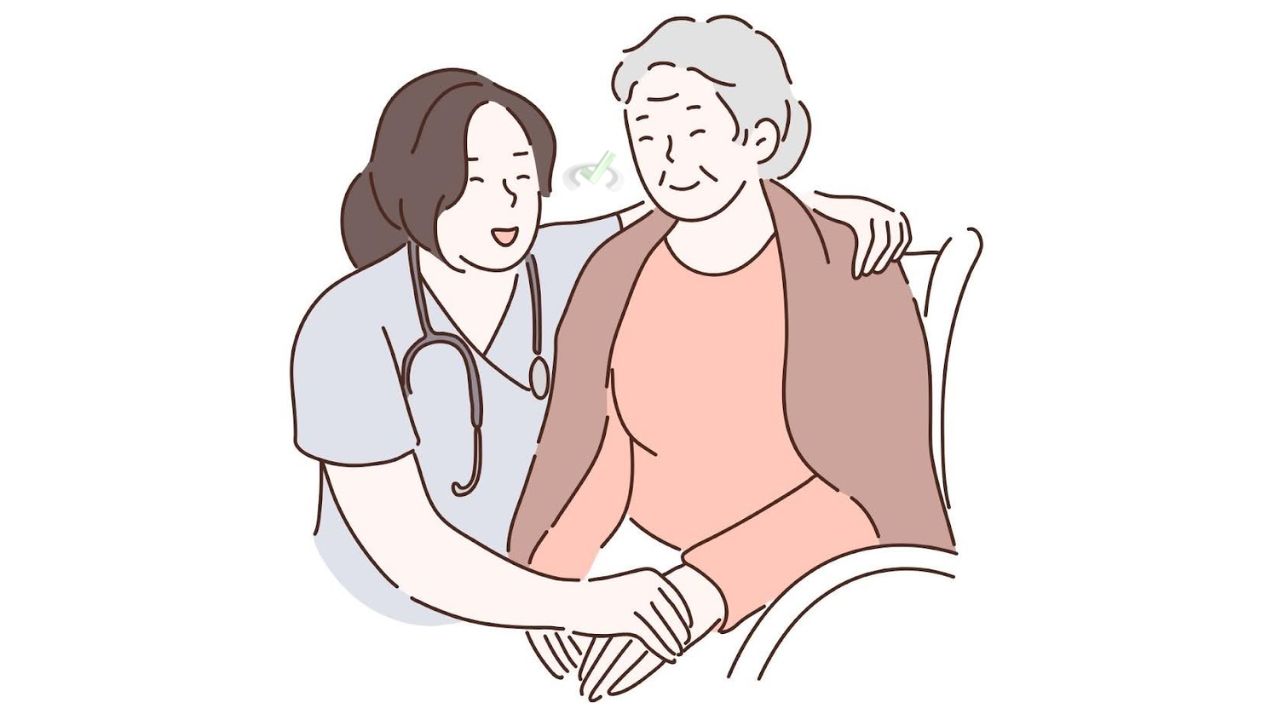
The Safe and Effective Care Environment checks if you’re ready for the nursing floor. It tests your knowledge, your instincts, and your ability to make the right call under pressure. From managing care and delegating tasks to jumping into action during emergencies, it looks at how you keep patients safe while making sure everything runs smoothly.
Prepare by knowing how these principles work in real life. Practice questions until you don’t just know the answer—you understand it. Think safety, act fast, and trust that you’re ready to step into this role.
When you grasp the heart of Safe and Effective Care Environment, you’re not just ready for the NCLEX-RN. You’re ready to be a nurse who protects, manages, and stands up for patients in every shift you take.