Reason for the Correct Answer:
Paragraph 2 discusses the Btk mutation and its effects.
It states that “Btk is a signal transduction molecule downstream of the pre-B-cell receptor (PreBCR). In a healthy person, the enzyme is activated by the pre-B-cell receptor and delivers biochemical signals that prompt the B cells to divide or mature.”
Accordingly, it makes the most sense that a mutation in Btk would result in arrest in the development of B lymphocytes, particularly at the pre-B cell stage.
Note that these are the stages of B cell development, for those interested. You can see the pre-BCR receptor on the large pre-B cell:
https://commons.wikimedia.org/wiki/File:Early_B_cell_development.svg
According to the passage, mutations in Btk most likely result in:
A. inadequate signaling between B cells and T cells, interfering with the immune response.
B. arrest in the development of B lymphocytes at the early stage of large pre-B-cells.
C. defects in B cell receptors that inhibit their ability to bind antigens.
D. an excess number of B cells in circulation.
The passage states that HIES is inherited in an autosomal recessive or dominant fashion. Therefore, the risk of disease should be the same for males and females.
In the pedigree, individuals with the disease are shown in black.
In autosomal recessive conditions, the disease can skip generations; in autosomal dominant it cannot.
Notice how the disease skips a generation for individuals 8 and 9 – their parents and children have the disease but they do not.
That means this is autosomal recessive, and autosomal recessive conditions generally occur due to loss-of-function gene mutations.
Which of the following is most likely true regarding the pedigree shown in Figure 2?
A. Disease occurs in individuals carrying one or two copies of the gene mutation.
B. The disease results from a defect in a DNA-binding protein.
C. The disease is caused by a loss-of-function mutation.
D. The risk of disease is higher for males than females.
In autosomal inheritance, each offspring receives one allele from the father and one from the mother.
People with the disease are homozygous and must therefore pass a diseased allele to their children.
Children who have the disease must also have received a mutated copy from each parent. So both of their parents must either be carriers or have the disease.
Accordingly, Person 3 must be a carrier because she had a child with the disease.
Persons 8 and 12 must also be carriers because they had a parent with the disease.
Person 16, however, had two parents who are both carriers. But she could have received the normal allele from both parents and therefore could be homozygous for the normal allele.
Based on the pedigree analysis in Figure 2, which family member is NOT a definitive carrier of the HIES-causing mutation?
A. Person number 3
B. Person number 8
C. Person number 12
D. Person number 16
In X-linked inheritance, males receive one allele from the mother and none from the father; females receive one allele from each parent.
The progeny of person number 4 includes one male exhibiting the disease and one who is normal. Also, person number 4 has a mother with the disease.
Person number 4 has one normal and one disease allele that she must have inherited from her mother and that she passed to her son.
In Figure 1, what is the genotype of the Bruton’s tyrosine kinase allele in person number 4?
A. This person has one normal and one disease allele.
B. This person has two normal alleles.
C. This person has two disease alleles.
D. This person only has one allele and it is normal.
In X-linked inheritance, males receive one allele from the mother and none from the father, while females receive one allele from the father and one allele from the mother.
In X-linked recessive inheritance, a female must have two disease alleles to exhibit the disease.
In this case, all of the males will receive a disease allele from the mother, while the females will receive one disease allele from the mother and one normal allele from the father.
100% of the females will be normal, while 100% of the males will have Bruton’s syndrome.
If a female who has Bruton’s syndrome married a male who did not have the disease, what phenotypes would their progeny exhibit?
A. 100% of the females will be normal, while 100% of the males will have Bruton’s syndrome
B. 100% of the females will have Bruton’s syndrome, while 100% of the males will be normal
C. 50% of the males and females will be normal and 50% will have Bruton’s syndrome
D. There is not enough information to answer this question
According to the passage, Btk is a “cytoplasmic protein tyrosine kinase”.
A tyrosine kinase is an enzyme that installs a phosphate group on the oxygen atom of a tyrosine side chain of the substrate.
This reaction is illustrated below:
You can see that three O atoms and one P atom have been added to the structure, and that one H atom has been removed (at neutral pH the phosphate group has two negative charges).
Therefore, the change in molecular mass can be calculated as:
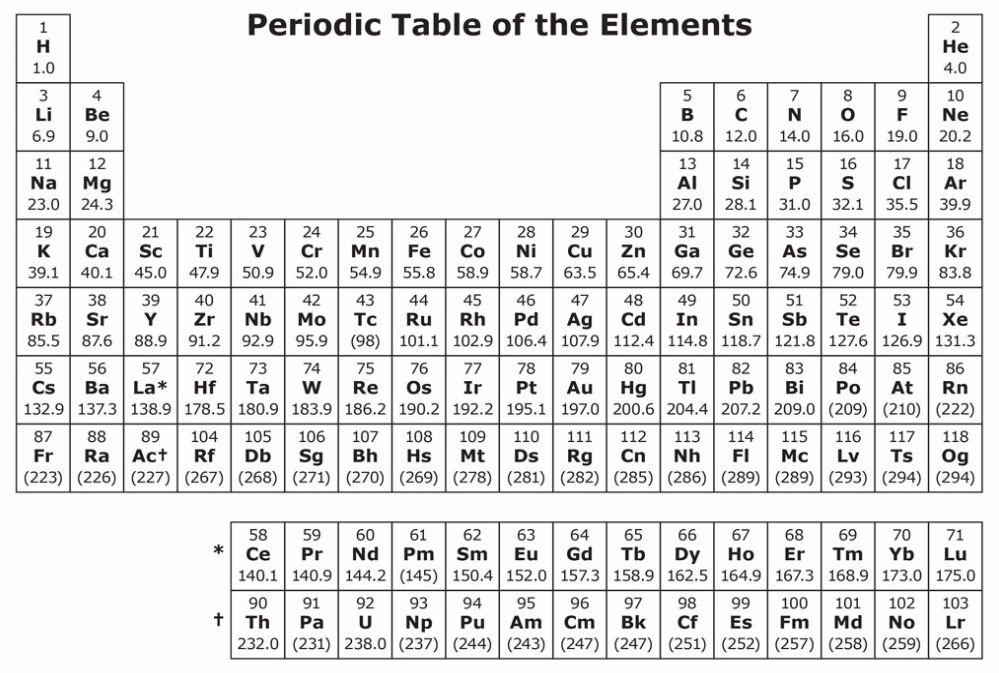
(3 x atomic mass of O) + (1 x atomic mass of P) – (1 x atomic mass of H) = (3 x 16) + (1 x 31) + (1 x 1) = +80 Da (80 g/mol)
Researchers used mass spectrometry to analyze the substrates of Btk. What change in molecular mass would they expect to see when an appropriate substrate is processed by activated Btk?
A. +80 Da
B. +14 Da
C. –96 Da
D. –11 Da