| Questions Correct | Questions Answered | Time Spent | Status | Attempt Date | |
|---|---|---|---|---|---|
| -- | -- | -- | -- | -- |
| Questions Correct | Questions Answered | Time Spent | Status | Attempt Date | |
|---|---|---|---|---|---|
| -- | -- | -- | -- | -- |
Array
(
[passage] => WP_Post Object
(
[ID] => 559982
[post_author] => 12815
[post_date] => 2025-01-09 22:05:58
[post_date_gmt] => 2025-01-10 03:05:58
[post_content] => Practice Passage (Question 1-5)
*This passage is the property of Khan Academy and has been reformatted into an AAMC-style interface in their entirety by MedLife Mastery. MedLife Mastery does not endorse and is not an affiliate of Khan Academy.
Ethanol (CH3CH2OH) is a clear, colorless liquid with a distinct odor and is the alcohol found in alcoholic beverages. In addition to its other physical properties (Table 1), alcohol is flammable and volatile, lending it to be used as a solvent, an antiseptic, a fuel, in thermometers, and in other laboratory procedures. As a psychoactive substance, it is one of the most widely consumed recreational drugs by humans. It suppresses certain functions of the brain while causing the classic symptoms of intoxication including slurred speech, unsteady walk, and disturbed sensory perceptions.
Table 1: Physical properties of ethanol at 20°C
Ethanol is produced by the fermentation of sugar. This process is catalyzed by zymase, an enzyme in yeast which changes simple sugars into ethanol and carbon dioxide. This fermentation reaction is represented by the equation in Figure 1.
Figure 1. The alcohol fermentation reaction
Starches from potatoes, corn, wheat, and other plants can also be used to produce ethanol through fermentation. However, the starches must first be broken down. This is accomplished by enzymes, such as diastase, which converts starches into simple sugars. This step is typically associated with the brewing of beer from starchy plants such as corn and wheat.
After an alcoholic beverage is consumed, it passes through the stomach into the small intestine where the ethanol is absorbed and later distributed throughout the body. Ethanol is toxic, and the body begins to dispose of it upon its consumption. In the liver, the alcohol dehydrogenase enzyme converts ethanol into acetaldehyde. Acetaldehyde is later destroyed almost immediately by the aldehyde dehydrogenase enzyme.
Figure 2: The conversion of ethanol to acetaldehyde
[post_title] => Alcohol production and absorption
[post_excerpt] =>
[post_status] => publish
[comment_status] => closed
[ping_status] => closed
[post_password] =>
[post_name] => alcohol-production-and-absorption
[to_ping] =>
[pinged] =>
[post_modified] => 2025-01-09 22:08:52
[post_modified_gmt] => 2025-01-10 03:08:52
[post_content_filtered] =>
[post_parent] => 0
[guid] => https://medlifemastery.com/?post_type=passage&p=559982
[menu_order] => 0
[post_type] => passage
[post_mime_type] =>
[comment_count] => 0
[filter] => raw
)
[questions] => Array
(
[0] => Array
(
[quiz_unique_key] => 578908434
[question] => What would be the volume of 1.58 moles of ethanol at 20°C?
[value] => Array
(
[answer] => 2
[description] => Reason for the Correct Answer:
Volume is mentioned in the passage in Table 1.
Table 1 lists the density (0.79 g/mL) and molar mass (46.07 g mol-1) of ethanol.
In order to convert 1.58 moles of ethanol to volume, we need to have a conversion equation where the units will cancel out.
To set up a conversion equation, we begin with our starting units and multiply by several ratios that which all equals 1 but cancels out the previous units
Rounding our numbers, we can see that 1.58 is double 0.79, which allows our answer to be 2 ✕ 46.07 = 92.14 mL of ethanol.
)
[answers] => Array
(
[0] => Array
(
[each_answer] => A. 23.35 mL
)
[1] => Array
(
[each_answer] => B. 92.14 mL
)
[2] => Array
(
[each_answer] => C. 186.68 mL
)
[3] => Array
(
[each_answer] => D. 46.67 mL
)
)
)
[1] => Array
(
[quiz_unique_key] => 3873426850
[question] => How can the percentage of carbon by mass in ethanol be calculated?
[value] => Array
(
[answer] => 1
[description] => Reason for the Correct Answer:
Ethanol’s molecular formula is CH3CH2OH.
There are 2 moles of carbon for every mole of ethanol.
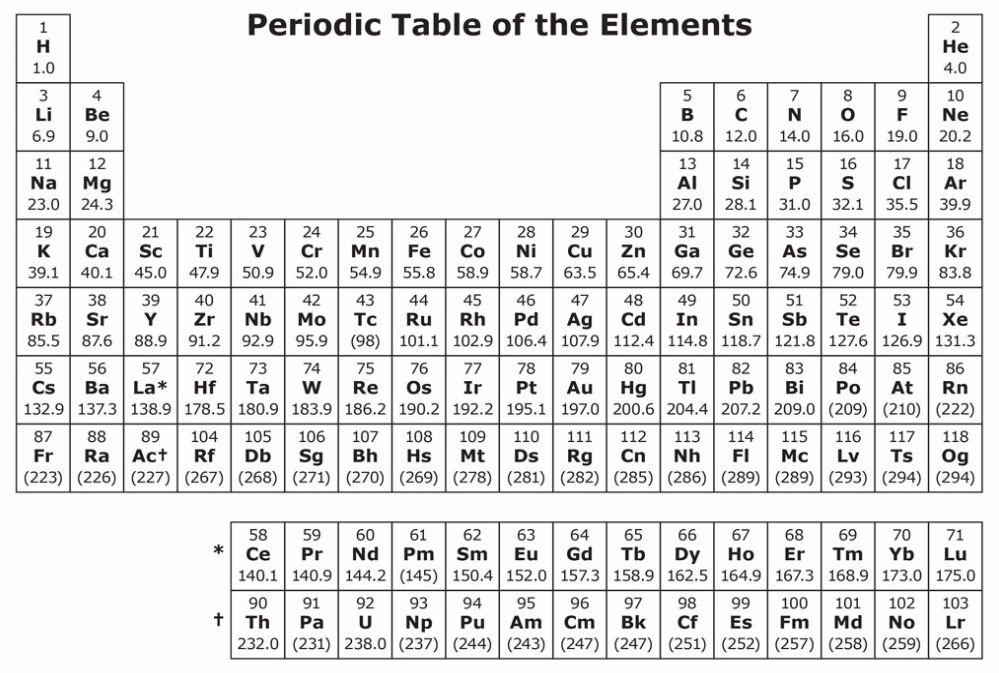
A periodic table shows that the molar mass of carbon is 12.01 grams / mole.
According to Table 1, there are 46.07 grams per mole of ethanol.
We know that each carbon atom contributes 12.01 g/mol to the total molar mass of ethanol (46.07 g/mol). Therefore if we multiply the number of carbon atoms by the molar mass of carbon and then divide that by the total molar mass of ethanol, we get the fraction of the total ethanol by mass that is from the carbons. Mathematically, this looks like:
)
[answers] => Array
(
[0] => Array
(
[each_answer] =>
)
[1] => Array
(
[each_answer] =>
)
[2] => Array
(
[each_answer] =>
)
[3] => Array
(
[each_answer] =>
)
)
)
[2] => Array
(
[quiz_unique_key] => 83407773
[question] => The molar mass of sugar is 180.16 g/mol. If 1801.6 grams of sugar was used in the alcohol fermentation reaction, how many grams of ethanol is produced?
[value] => Array
(
[answer] => 4
[description] => Reason for the Correct Answer:
Since you cannot convert grams of reactants to grams of products you must convert grams of sugar (C6H12O6) to moles of sugar, then from moles of sugar to moles of ethanol (CH3CH2OH), and then finally convert moles of ethanol to grams of ethanol.
According to Figure 1, the ratio of sugar to ethanol is 1:2.
)
[answers] => Array
(
[0] => Array
(
[each_answer] => A. 460.7 g
)
[1] => Array
(
[each_answer] => B. 1842.8 g
)
[2] => Array
(
[each_answer] => C. 230.4 g
)
[3] => Array
(
[each_answer] => D. 921.4 g
)
)
)
[3] => Array
(
[quiz_unique_key] => 2377279144
[question] => An experimenter conducts the reaction in Figure 2 in a laboratory setting and discovers that the percent yield is 80%, How many grams of acetaldehyde can the experimenter expect to obtain if he starts the reaction with 23.04 grams of ethanol?
[value] => Array
(
[answer] => 3
[description] => Reason for the Correct Answer:
Figure 2 indicates the reaction of ethanol converting into acetaldehyde and two hydrogen atoms. Adding the molar mass of each atom gives us the molar mass of the molecule.
According to Table 1, the molar mass of ethanol is 46.07 g mol-1 while the molar mass of acetaldehyde is approximately 44 g mol-1.
Since you cannot convert grams of reactants to grams of products you must convert grams of ethanol to moles of ethanol, then from moles of ethanol to moles of acetaldehyde, and then finally convert moles of acetaldehyde to grams of acetaldehyde. Lastly you must take into account that only 80% of the product is actually obtained in experimental conditions.
To determine the grams of acetaldehyde obtained, we need to set up and solve the following expression:

Since 23.04 is roughly half of 46.07, we can simplify the expression to:

)
[answers] => Array
(
[0] => Array
(
[each_answer] => A. 22 grams
)
[1] => Array
(
[each_answer] => B. 11 grams
)
[2] => Array
(
[each_answer] => C. 17.6 grams
)
[3] => Array
(
[each_answer] => D. 21.3 grams
)
)
)
[4] => Array
(
[quiz_unique_key] => 2261298308
[question] => Which of the following is NOT conserved in the chemical reaction equation in Figure 1?
[value] => Array
(
[answer] => 2
[description] => Reason for the Correct Answer:
Atoms will interact with each other and be rearranged into different combinations but atoms are indivisible and cannot be destroyed. Since Figure 1 is a balanced equation with the correct coefficients, we can see that the number and type of atoms are conserved between both sides of the reaction.
If atoms are conserved, then the protons within the atoms are also conserved. We can see that charge is conserved as the reaction in Figure 1 consist of only neutral compounds. If both protons and charge is conserved in both sides of the reaction, then electrons are also conserved.
Mass is neither created or destroyed during the course of a non-nuclear chemical reaction. If atoms cannot be destroyed then the mass of reactants must equal the mass of the products in a chemical reaction, despite their rearrangement.
Atoms rearrange into different compounds, therefore molecules or the number of molecules are not conserved between both sides of the reaction. In Figure 1, we have one molecule of reactant splitting into four molecules of products.
)
[answers] => Array
(
[0] => Array
(
[each_answer] => A. Mass
)
[1] => Array
(
[each_answer] => B. Number of molecules
)
[2] => Array
(
[each_answer] => C. Number of electrons
)
[3] => Array
(
[each_answer] => D. Number of atoms
)
)
)
)
[total_question] => 5
[correct_answers] => Array
(
[559982|1] => B
[559982|2] => A
[559982|3] => D
[559982|4] => C
[559982|5] => B
)
[hide_display_feedback_settings] =>
[hide_solutions] =>
)