| Questions Correct | Questions Answered | Time Spent | Status | Attempt Date | |
|---|---|---|---|---|---|
| -- | -- | -- | -- | -- |
| Questions Correct | Questions Answered | Time Spent | Status | Attempt Date | |
|---|---|---|---|---|---|
| -- | -- | -- | -- | -- |
Array
(
[passage] => WP_Post Object
(
[ID] => 560171
[post_author] => 12815
[post_date] => 2025-01-10 10:18:47
[post_date_gmt] => 2025-01-10 15:18:47
[post_content] => Practice Passage (Question 1-5)
*This passage is the property of Khan Academy and has been reformatted into an AAMC-style interface in their entirety by MedLife Mastery. MedLife Mastery does not endorse and is not an affiliate of Khan Academy.
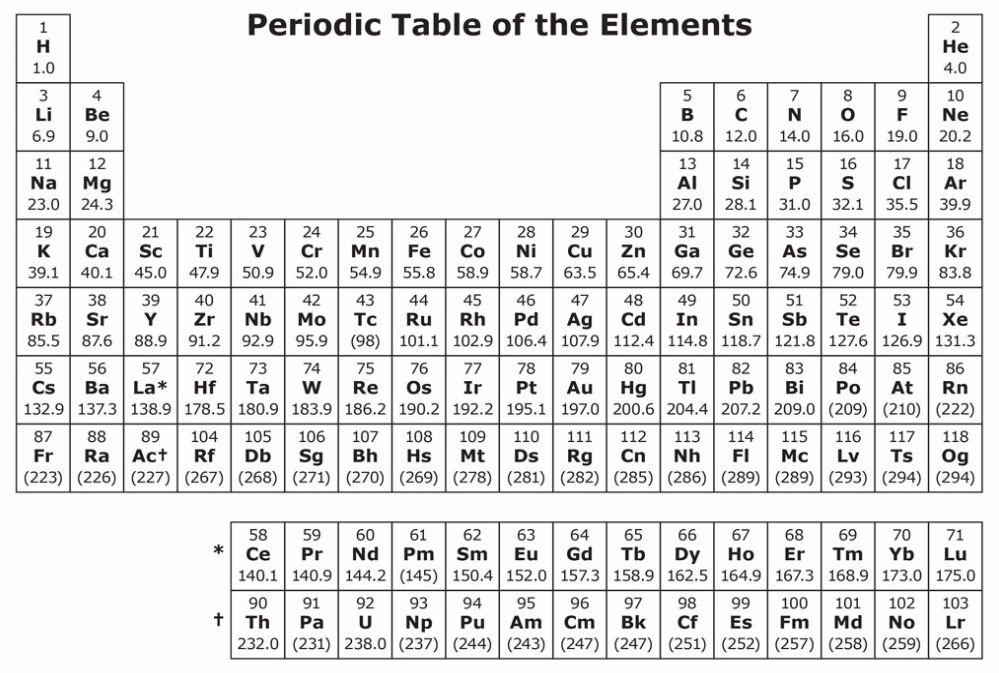
Element 31, gallium, is a silvery-white metal at room temperature with numerous scientific applications. In medicine, gallium is best known for the gallium scan, which involves injecting a radioactive isotope of gallium into blood vessels to localize sites of inflammation and infection. However, gallium's most common use is in the electronics industry, where gallium arsenide is essential in manufacturing microwave circuits, LEDs, and solar cells, among other applications.
The reaction processes for the manufacture of gallium arsenide are given below. An important complicating factor is contamination of the final product with silicon, formed from the quartz (silicon dioxide) reaction vessel used in the oxidation of gallium.
Reaction 1: Elemental gallium reacts with silicon dioxide to form gallium (I) oxide and silicon monoxide in a reversible reaction.
Reaction 2: Gallium (I) oxide reacts with elemental arsenic to form gallium oxide and gallium arsenide in a reversible reaction.
Researchers studying this process obtained the following thermodynamic data are obtained for Reaction 1.
ln K at 298 K = -72
K at 298 K = 5.38*10⁻³²
ΔH° reaction at 298 K = 171,070 cal/mole
Curve 1 in Figure 1 shows how the natural log of the equilibrium constant of Reaction 1 varied with temperature.
Figure 1. ln K vs. temperature (in °C) for Reaction 1 (curve 1)
[post_title] => Gallium arsenide formation
[post_excerpt] =>
[post_status] => publish
[comment_status] => closed
[ping_status] => closed
[post_password] =>
[post_name] => gallium-arsenide-formation
[to_ping] =>
[pinged] =>
[post_modified] => 2025-01-10 10:21:44
[post_modified_gmt] => 2025-01-10 15:21:44
[post_content_filtered] =>
[post_parent] => 0
[guid] => https://medlifemastery.com/?post_type=passage&p=560171
[menu_order] => 0
[post_type] => passage
[post_mime_type] =>
[comment_count] => 0
[filter] => raw
)
[questions] => Array
(
[0] => Array
(
[quiz_unique_key] => 578908434
[question] => What is the electron configuration of elemental gallium?
[value] => Array
(
[answer] => 4
[description] => Reason for the Correct Answer:
When determining the electron configuration for an element, it is important to recognize the order of the orbitals (e.g. 1s, 2s, 2p, 3s, 3p, 4s, 3d, 4p).
For gallium (element 31) we can figure out 4p¹ relatively easily. However, it is important to recognize that the d orbital prior to 4p is 3d, not 4d.
The electron configuration of elemental gallium is [Ar]4s²3d¹⁰4p¹.
)
[answers] => Array
(
[0] => Array
(
[each_answer] => A. [Ar]4s²4p¹
)
[1] => Array
(
[each_answer] => B. [Ar]4s²4d¹⁰4p¹
)
[2] => Array
(
[each_answer] => C. [Ar]4p¹
)
[3] => Array
(
[each_answer] => D. [Ar]4s²3d¹⁰4p¹
)
)
)
[1] => Array
(
[quiz_unique_key] => 3873426850
[question] => Which of the chemical formulas below is correct for Reaction 2?
[value] => Array
(
[answer] => 3
[description] => Reason for the Correct Answer:
Let’s convert the words in Reaction 2 into chemical symbols – gallium (I) oxide is easy, because the oxidation state of gallium has already been given to you. Oxygen’s oxidation state is usually -2, so gallium (I) oxide becomes Ga₂O. As2 is the reactive vapor form of arsenic, and that has already been provided for you in all the answer choices.
The key to this question is to figure out the normal oxidation state of Ga+ and As–. Gallium is in the same group as boron, which means that gallium is most likely 3+. Arsenic is in the same group as nitrogen, which means that arsenic is most likely 3–. This means that with a 3+ oxidation state for gallium and 2– for oxygen, gallium oxide will be Ga₂O₃. For gallium arsenide, we have GaAs. All that’s left is to balance the chemical equation.
The chemical formula for Reaction 2 is 3Ga₂O + 2As₂ ⇆ Ga₂O₃ + 4GaAs
)
[answers] => Array
(
[0] => Array
(
[each_answer] => A. 3Ga₂O + 3As₂ ⇆ Ga₂O₃ + 2Ga₂As₃
)
[1] => Array
(
[each_answer] => B. 4Ga₂O + As₂ ⇆ 2Ga₃O₂ + 2GaAs
)
[2] => Array
(
[each_answer] => C. 3Ga₂O + 2As₂ ⇆ Ga₂O₃ + 4GaAs
)
[3] => Array
(
[each_answer] => D. 8Ga₂O + 3As₂ ⇆ 4Ga₃O₂ + 2Ga₂As₃
)
)
)
[2] => Array
(
[quiz_unique_key] => 83407773
[question] => From the data, what can you conclude about ΔS of reaction 1 at 298 K? (use R = 2 cal/mol⁻¹K⁻¹)
[value] => Array
(
[answer] => 2
[description] => Reason for the Correct Answer:
First, we recognize that S is entropy, not enthalpy (that would be H), a measure of the disorder and randomness in a system. This means the two enthalpy choices are automatically incorrect.
Utilizing the Gibbs free energy equation, we see ΔG = ΔH – TΔS for the reaction. Note this is for the whole reaction, so we need the ΔH°ʀᴇᴀᴄᴛɪᴏɴ. This is given as positive 171,070. T is 298. However, we need another missing piece – ΔG.
ΔG can be found using ΔG = -RT ln K. Substituting this into ΔG = ΔH – TΔS, we have -RT ln K = ΔH – TΔS. Rearranging, we have ΔS = ΔH/T + R ln K. You don’t have a calculator on the test, but you can roughly estimate. R ln K is -144 (-72*2). ΔH/T will be much larger than that given ΔH=171,070 (even if you underestimate this at 150,000 to make it easier to divide by 300, you still get 500). Thus, ΔS will be positive.
ΔS is positive and the entropy of the system increases.
)
[answers] => Array
(
[0] => Array
(
[each_answer] => A. It is negative, entropy of the system decreases
)
[1] => Array
(
[each_answer] => B. It is positive, entropy of the system increases
)
[2] => Array
(
[each_answer] => C. It is negative, enthalpy of the system decreases
)
[3] => Array
(
[each_answer] => D. It is positive, enthalpy of the system increases
)
)
)
[3] => Array
(
[quiz_unique_key] => 2377279144
[question] => Why is the reaction vessel made of quartz?
[value] => Array
(
[answer] => 1
[description] => Reason for the Correct Answer:
Thermal conductivity measures how well a material conducts heat. Reaction vessels are designed to be relatively insulated systems, given the large amount of released heat in the reactions conducted in these vessels. Materials with high thermal conductivity values conduct heat well (e.g. copper) and are used for electronics, while materials with low thermal conductivity values (e.g. quartz) are used for insulation.
Thermal expansion measures the amount of expansion in a material in response to heat. A glass that cracks when hot liquid is poured into it demonstrates thermal expansion. We do not want the reaction vessel to change shape or crack during experimentation, so quartz possesses a low thermal expansion value.
Quartz possesses a high melting point (so the vessel can endure the intense heat of the reaction!). Just for your own interest, quartz’s melting point is around 1700 °C and the reactions discussed in this passage is generally carried out at 1000 °C.
)
[answers] => Array
(
[0] => Array
(
[each_answer] => A. Quartz possesses a high melting point.
)
[1] => Array
(
[each_answer] => B. Quartz possesses a high thermal conductivity value.
)
[2] => Array
(
[each_answer] => C. Quartz possesses a high thermal expansion value.
)
[3] => Array
(
[each_answer] => D. Two of the three answer choices are true.
)
)
)
[4] => Array
(
[quiz_unique_key] => 2261298308
[question] => What can you conclude about the spontaneity of Reaction 1 (in the forward direction) as the temperature decreases?
[value] => Array
(
[answer] => 4
[description] => Reason for the Correct Answer:
Use ΔG = -RT ln K.
Use Figure 1. We can see that ln K becomes more negative as the temperature decreases. This means ΔG will continue to be positive and hence less spontaneous in the forward direction.
The reaction becomes less spontaneous as the temperature decreases.
)
[answers] => Array
(
[0] => Array
(
[each_answer] => A. The spontaneity of the reaction is not related to the temperature.
)
[1] => Array
(
[each_answer] => B. The spontaneity of the reaction is not in a linear relationship with temperature.
)
[2] => Array
(
[each_answer] => C. The reaction becomes more spontaneous as the temperature decreases.
)
[3] => Array
(
[each_answer] => D. The reaction becomes less spontaneous as the temperature decreases.
)
)
)
)
[total_question] => 5
[correct_answers] => Array
(
[560171|1] => D
[560171|2] => C
[560171|3] => B
[560171|4] => A
[560171|5] => D
)
[hide_display_feedback_settings] =>
[hide_solutions] =>
)