
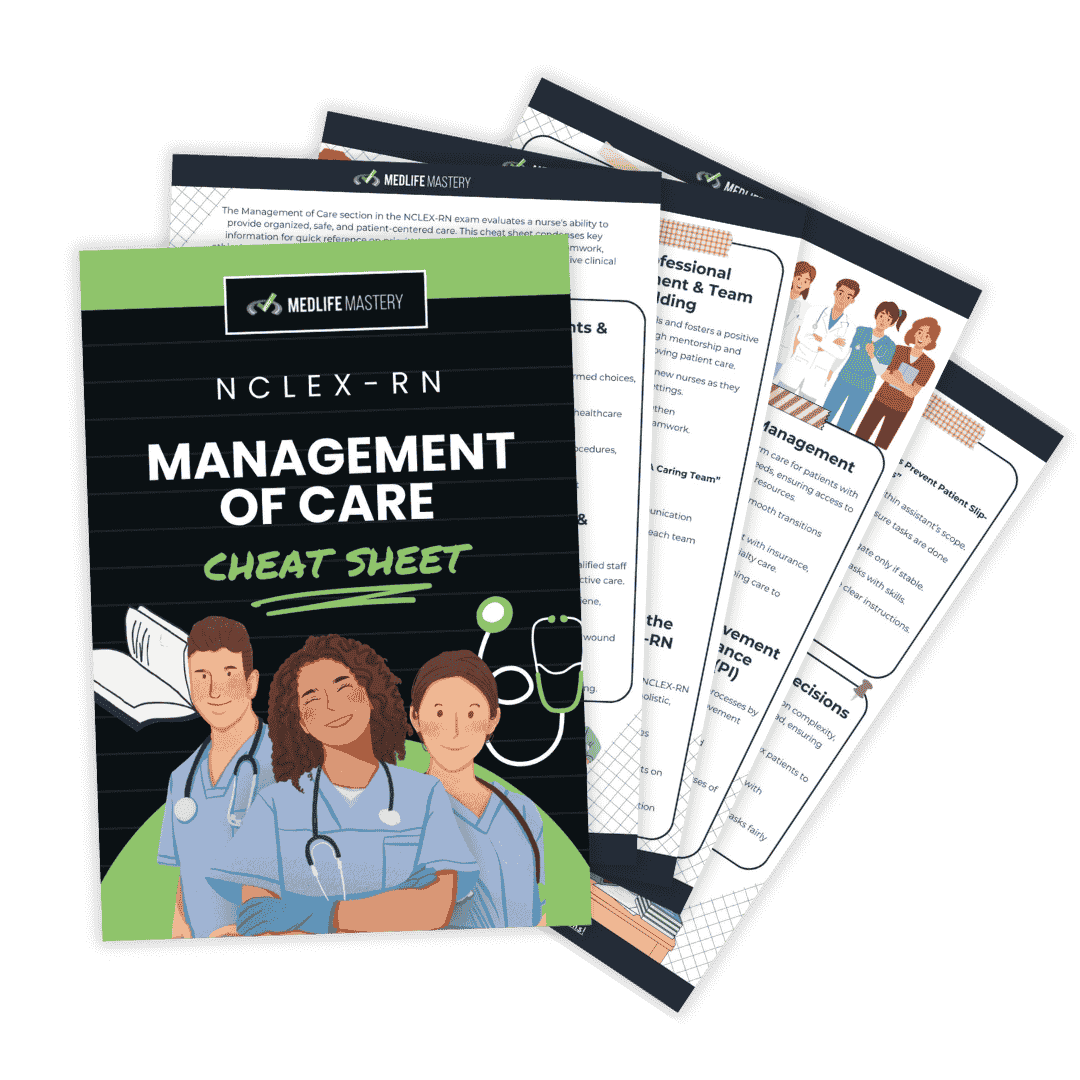
Management of Care RN Cheat Sheet - Free PDF Download

Nursing involves more than just memorizing facts and administering medications. It’s about quick thinking, team coordination, and making decisions that keep patients safe. That’s what Management of Care in NCLEX-RN tests. This section checks if you can juggle tasks, set priorities, and work with your team under pressure.
Mastering this skill set prepares you for real-world nursing, where these abilities come into play every day. Let’s walk through the key details that help you ace this section and your future shifts.
What Does "Management of Care" Mean in the NCLEX-RN?
So, what’s the deal with “management of care”? A crucial component of the NCLEX-RN it assesses your capacity to administer and plan nursing care. Beyond the fundamentals this section goes. When it matters it asks Can you keep it all together? You must demonstrate that you can.
This section isn’t a side note—it’s about 20% of your exam. Getting this right doesn’t just mean passing; it means you’re set up for those unpredictable, high-stakes days on the floor.
Core Concepts to Know for Management of Care
The Management of Care section of the NCLEX-RN tests key skills every nurse needs to succeed. Mastering these core concepts helps you prioritize, delegate, and make quick decisions in real-world scenarios.
Prioritization: The Art of Knowing What Comes First
Prioritization sounds simple until you face a shift where everything screams for your attention at once. Picture it: one patient calls for pain meds, another spikes a fever, and a third gasps for air. Who goes first? The answer matters, and so does how you come to it.
The ABCs: Airway, Breathing, and Circulation
When unsure, go back to the ABCs:
The ABCs save lives and help you choose where to start when seconds matter. The NCLEX-RN loves questions that test if you know how to apply this in chaotic situations.
Maslow’s Hierarchy of Needs and Nursing Priorities
Maslow’s hierarchy can help when things seem equally urgent. Physical needs come first—oxygen, food, water, and sleep. These needs keep a patient alive. Safety comes next, followed by emotional and psychological needs. Understanding this helps you set priorities when you face multiple patients with different conditions.
The Nursing Process and How It Fits into Management of Care in NCLEX-RN
Think of the nursing process as your backbone in practice. Whether you're in an examination room or at a patients bedside it keeps your approach orderly and transparent.
There are five steps in this structured approach:
The nursing process gives you a way to think clearly under pressure. Each step matters and comes together to form the complete picture of patient care. The NCLEX-RN tests if you know how to move through these steps smoothly and make sound decisions.
Delegation and Supervision: Sharing the Load, the Right Way
Delegation isn’t about passing tasks off; it’s about smart teamwork. You need to understand which tasks you can delegate, who can handle them, and how to ensure they get done right.
The 5 Rights of Delegation
Delegating isn’t just throwing jobs to whoever is free. It’s about knowing your team and trusting them to do their best for patient safety.
Tasks to Delegate and Tasks to Keep
You can pass certain tasks to licensed practical nurses (LPNs) or certified nursing assistants (CNAs).
These include:
What stays in your hands? Assessments, patient education, and any task needing critical thinking. The NCLEX-RN tests if you know when to step in and when to share the load.
The Role of Communication in Management of Care in NCLEX-RN
Good communication keeps teams working smoothly. Whether you’re updating a doctor, guiding a CNA, or discussing a case with another nurse, clarity matters. Missed messages can mean missed care, and that’s a big risk.
SBAR Technique: Your Communication Blueprint
SBAR (Situation, Background, Assessment, Recommendation) helps you keep updates short and clear:
The NCLEX-RN might include scenarios where you need to show that you know how to use this model. SBAR makes sure important info gets across without fluff or confusion.
Communicating with Patients and Families
The exam also checks if you can keep patients and families informed without causing panic. Explain care plans in simple terms and answer questions clearly. Good communication doesn’t just help you pass tests—it builds trust on the job.
Real-World Scenarios to Expect in the NCLEX-RN
Case Study 1: Managing a Code Situation
Picture this: You step into a room, and the patient looks unwell—short, quick breaths and a glazed-over look in their eyes. Time feels tight, and your heart beats faster, but you know what to do. You call for backup and assess the airway. The team arrives, and everyone jumps into their roles.
You brief the attending physician on the patient’s status without missing a beat. This is where your training shines. The NCLEX-RN won’t ask if you know where the stethoscope is. It asks if you can lead, act, and communicate all at once when seconds count.
Case Study 2: Handling a Medication Error
It happens. Even the best nurses see mistakes on the floor. The key is knowing how to act when it does. Let’s say you spot a medication error. Your response shows your true colors:
The NCLEX-RN wants to see if you know the safest and most professional steps to take. Quick, transparent action keeps the patient safe and helps prevent future issues.
Prioritization Practice: Which Patient First?
Start a shift, and three patients need attention. One has slightly high blood pressure, one feels confused after surgery, and another shows an oxygen level of 88%. Who do you go to first?
The patient with the low oxygen level. The test loves these scenarios to see if you can sort through urgency. Getting these questions right can mean the difference between safe patient care and missed critical cues.
Strategies to Ace Management of Care in NCLEX-RN
Acing the Management of Care section requires sharp strategies and smart test-taking techniques. With the right approach, you can tackle prioritization, delegation, and communication questions with confidence.
The Importance of Staying Calm Under Pressure
Nursing is not just knowing what to do—it’s knowing how to keep calm while you do it. The Management of Care in NCLEX-RN section pushes you to think fast and stay steady. During practice, run through scenarios with a clear head. On test day, take deep breaths between questions if you need to. Calm helps you think better.
Conclusion: Management of Care Skills Are Your Secret Weapon

Mastering Management of Care in NCLEX-RN means you don’t just pass an exam—you walk into work ready. Every question on prioritization, delegation, or communication builds skills you’ll use on every shift.
Knowing what to do and when to do it helps you take control, protect patients, and stay confident. These skills mean you’re not just surviving a shift; you’re leading it. Keep practicing those case studies. Go over prioritization exercises and review delegation rules until they feel like second nature.
Get these down, and your exam day feels less like a hurdle and more like a step toward the career you’ve worked so hard to reach. The exam room is your practice field. The real game begins the moment you step into your first job, and with strong management of care skills, you’ll start off strong.