
Allergists and immunologists treat asthma, food and drug allergy, eczema, chronic sinus disease and the immune deficiencies that leave patients catching infections they should be shrugging off. Much of the work is diagnostic detective work, built on skin and blood testing, controlled challenges, and long-run management of conditions that flare and settle rather than resolve. It is one of the few fields that treats children and adults side by side across a whole career.
This guide covers allergy and immunology end to end, walking through the route in, the years of training, what the work earns and how competitive the path is.
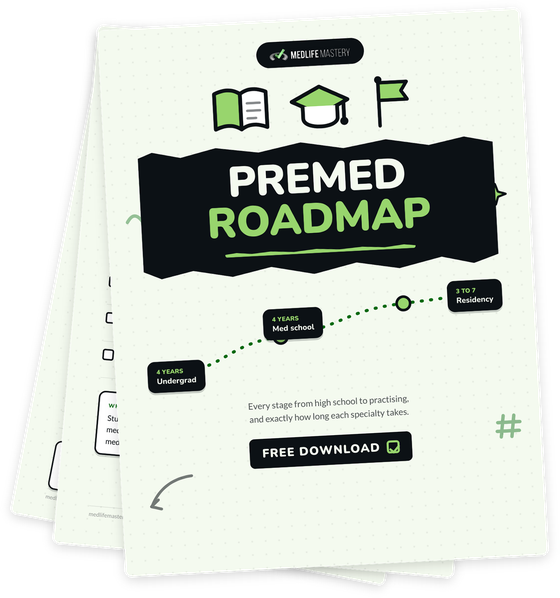
Free download
See the thirteen-year path to allergy and immunology, and what the year you are in right now has to produce.
Every stage from first semester to practising, how long each specialty takes, and what to do in the year you are in now.
On its way.
Check your inbox in the next minute.
Medical careers in allergy and immunology
ACGME accredits no subspecialties underneath allergy and immunology, which makes it one of the smaller and more self-contained fields in medicine. Careers here separate by setting and by focus rather than by a formal fellowship.
Mostly outpatient clinic, in private practice or attached to an academic centre, with some inpatient consultation for severe reactions and immune deficiency.
Our full guides go through the day-to-day of the roles inside it, covering allergist, immunologist.
How long does allergy and immunology training take?
All of the allergy and immunology on this page run through the same first eight years, and separate afterwards. Residency length is taken from the ACGME Data Resource Book for the 2024-2025 academic year.
- Bachelor's degree, four years. Any major works, as long as you finish the medical school prerequisites and sit the MCAT.
- Medical school, four years. Two years mostly preclinical, two years mostly in the hospital, with USMLE Step 1 and Step 2 along the way.
- Internal medicine or pediatrics residency, three years. Allergy and Immunology is entered as a fellowship, so a full residency comes first.
- Allergy and Immunology fellowship, two years. You finish a full residency in internal medicine or in pediatrics first, then apply for two more years of fellowship training.
That is thirteen years from starting your bachelor's degree to practising independently. How long medical school takes covers the middle four in detail.
How much do allergists and immunologists earn?
BLS does not publish a separate wage for allergists and immunologists. The closest official figure is its physicians, all other category, which had a median of $265,930 a year in 2025. Read it as the range the specialty sits inside rather than as its own number.
| Point | A year | What it means |
|---|---|---|
| Median | $265,930 | half earn more, half earn less |
| 10th percentile | $69,170 | the lower end, often early career or part time |
| 90th percentile | $452,360 | the upper end |
Figures from the BLS Occupational Employment and Wage Statistics, national estimates, 2025. Wages at the top of the scale are reported as equal to or greater than $239,200 in some categories, so a published median can sit below what practising physicians in the field report.
Earnings across allergy and immunology swing more on setting and geography than on the specialty itself. Academic posts sit below private practice, and rural positions often sit above urban ones for the same work.
How competitive is allergy and immunology?
Allergy and Immunology does not run through the NRMP Main Residency Match, so it does not appear in the national match tables the other specialties are measured by. Applications go through a separate match instead, and results come out earlier in the year.
The practical consequence is a compressed timeline. You are building your application, gathering letters and doing away rotations a full cycle ahead of classmates applying through the main match, which means the decision to pursue allergy and immunology has to come earlier than most.
How allergy and immunology compare with the other specialties
Training length. Allergy and Immunology residency runs two years. Of the nineteen specialties on this site, 0 are shorter and two are the same length. The spread across all of them is two years to five.
Size of the field. BLS counts 342,720 people employed in the physicians, all other category. A larger field means more posts advertised and more geographic choice about where you practise.
None of these numbers should pick a specialty for you. They are the constraints you are choosing inside, and the choice itself comes down to whether the day-to-day work holds your attention for thirty years.
Skills and requirements for allergy and immunology
Where the work happens. Mostly outpatient clinic, in private practice or attached to an academic centre, with some inpatient consultation for severe reactions and immune deficiency.
Who it suits. People who like puzzles with a long tail, who are comfortable with testing that has to be interpreted rather than read off, and who want continuity with patients over years.
How you get in. Allergy and immunology is a fellowship, not a residency. You finish a full residency in internal medicine or in pediatrics first, then apply for two more years of fellowship training.
Before any of that, the requirements match every other route into medicine. You need a bachelor's degree, the prerequisite coursework, clinical and research experience, an MCAT score, and a complete medical school application.
Common questions about allergy and immunology
Do you do internal medicine or pediatrics first?
Either one qualifies you. Internal medicine and pediatrics are both accepted routes into allergy and immunology fellowship, and a combined internal medicine-pediatrics residency works too. Your choice shapes the mix of patients you are most comfortable with rather than whether you can enter.
How long do allergy and immunology take to train for?
Thirteen years after you start your bachelor's degree. Four of undergraduate study, four of medical school and five of postgraduate training. Fellowship adds one to three more.
Careers in the other specialties
Every specialty on the same figures, so you can compare training length, earnings and match competitiveness side by side. anesthesiology, dermatology, diagnostic radiology, emergency medicine, family medicine, internal medicine, medical genetics, neurology, nuclear medicine, obstetrics and gynecology, ophthalmology, pathology, pediatrics, physical medicine and rehabilitation, preventive medicine, psychiatry, surgery, urology.
Final thoughts on allergy and immunology
People who like puzzles with a long tail, who are comfortable with testing that has to be interpreted rather than read off, and who want continuity with patients over years. tend to do well here, and the honest test of fit is whether the day-to-day appeals to you rather than whether the specialty is prestigious. You do not have to decide now. Almost nobody commits before their third-year clerkships, and plenty change their minds during residency.
What you can do now is keep the door open, and that comes down to your MCAT score and your application. Every route on this page starts in the same place.
- Studying for the MCAT now? The live MCAT course runs one cohort at a time with 515+ scorers teaching it.
- Want one-on-one help? MCAT tutoring pairs you with a mentor who scored in the range you are aiming at.
- Building an application rather than a score? Medical school admissions coaching covers the school list, the essays and the interviews.
- Wondering where to apply? The medical school hub lists every state and province with a program, and the specialty rankings cover which schools are strongest in each field.
- Just browsing? The free MCAT resources are a good place to start, and student score stories show what the jumps look like.
- Every accredited residency program in the country is searchable in ACGME's public directory.
Free download. What this year has to produce to keep allergy and immunology reachable
On its way.
Check your inbox in the next minute.