
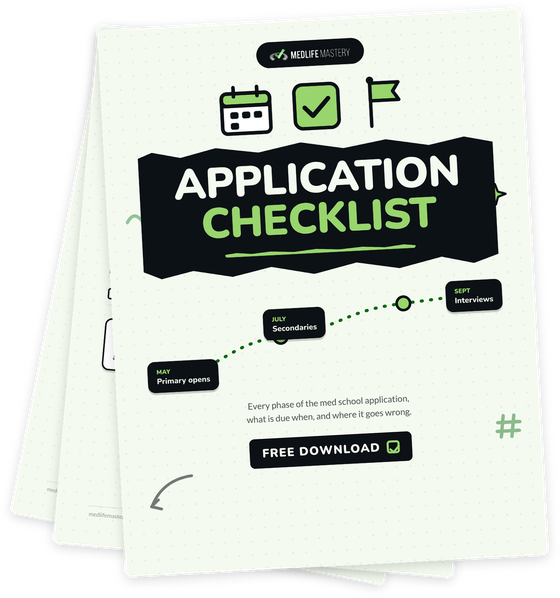
Free download
A T20 application is the same cycle, run earlier and tighter. Here is the cycle.
Every phase, what is due when, and where applications lose ground without noticing.
On its way.
Check your inbox in the next minute.
A T20 medical school can feel like the kind of goal that only belongs to people with flawless numbers, stacked resumes, and a perfectly engineered application. That is one of the biggest misconceptions in this process.
I knew plenty of people with excellent stats who did not land where they expected. I also knew people with less-than-perfect GPAs or MCAT scores who got into incredible programs. The difference was not luck alone. It was understanding what a T20 medical school is actually evaluating and building an application that shows fit, maturity, and purpose.
When I say T20 medical school, I am talking about the group of schools that are generally seen as among the strongest in the country for clinical training, academics, reputation, and opportunities. The exact rankings shift, but the bigger point stays the same: these schools are selective, holistic, and very interested in who you are beyond your stats.
Three myths that trip people up early
Your GPA and MCAT are everything

Strong numbers matter. They absolutely help. But they are better understood as door openers, not final proof that you belong at a T20 medical school.
A high GPA and MCAT can make admissions committees pause and take your application seriously. They can get you into the room. They can help you clear an initial screen. What they do not do is close the deal by themselves.
I had strong stats and still did not get interviews at some schools. That alone should tell you something. If numbers were enough, that would not happen. At the same time, I saw applicants with more modest metrics earn acceptances because they showed something admissions committees cared about just as much, or sometimes more:
- Clear fit with the school
- Meaningful extracurricular involvement
- A believable reason for pursuing medicine
- Maturity and self-awareness
- The ability to communicate their story well
If you are trying to gauge where your stats stand, it helps to compare them with actual school data. A resource like this breakdown of average MCAT scores and GPAs at U.S. medical schools can give you a realistic sense of the range.
You need research and publications to get into a T20 medical school

This one causes a huge amount of unnecessary stress.
Research can be valuable, especially if you are applying to academically intense schools. But having research is not the same thing as needing publications. And neither one is a universal requirement for a T20 medical school.
I did research myself, but I did not have publications. During the application cycle, that felt like a big deal. It turned out to matter much less than I thought. What mattered more was whether I could talk about the experience in a thoughtful, engaged way. Could I explain what I worked on? Could I describe what interested me? Could I show that I actually cared?
That is what admissions committees often want to see. Passion with depth beats prestige without substance.
In other words, if you did research, be ready to discuss it well. If you did not, that does not automatically hurt your chances at a T20 medical school. What matters is that your application reflects genuine commitment somewhere, not just random checking of boxes.
You need to fill every activity slot on your primary application
More activities do not automatically mean a stronger application.
It is far better to have a few experiences that genuinely shaped you than a long list of shallow, interchangeable entries. A T20 medical school is not looking for the most cluttered resume. It is looking for signs of meaning, growth, and intentionality.
Three or four truly important experiences can carry a lot of weight if you can explain:
- Why you chose them
- What you learned
- How they affected the way you think about medicine
- Why they still matter to you now
For me, some of the most meaningful experiences involved supporting underrepresented and underserved children. Those experiences were not valuable because they sounded impressive. They were valuable because they reflected something real about the kind of physician I wanted to become.
It is also completely okay to have interests that are not directly related to medicine. In fact, that can make your application stronger. I spent meaningful time on a dance team in college, and that mattered to me. It was part of my life, part of my growth, and part of what made college feel like an actual life rather than a four-year attempt to manufacture an admissions profile.
That is worth remembering. Pre-med is not supposed to be one long exercise in resume construction.
What actually helps you get into a T20 medical school
1. Put real thought into your narrative
At some point, every applicant has to answer the same huge question: Why medicine?
That does not mean your story has to sound dramatic or prewritten from childhood. You do not need a single defining moment that made everything obvious. You do not need a perfect theme that explains every decision you have ever made.
But you do need to reflect deeply enough to answer the question honestly.
A strong narrative for a T20 medical school application usually comes from real reflection on things like:
- Your values
- Your lived experiences
- The communities you care about
- The kind of work that energizes you
- The role you want medicine to play in your life
For me, that clarity did not arrive all at once. After COVID, I took a gap year because I did not feel ready to jump straight into medical school. That time gave me space to think more honestly about what I wanted. Over time, I realized I felt especially drawn to working with underserved children and urban pediatric populations.
That was not some cinematic breakthrough. It was gradual. It came from paying attention to the patterns in my own experiences and interests.
That is the kind of work a lot of applicants skip. They spend months building the application and then, when it comes time to write, they try to guess what admissions committees want to hear. Usually that produces a personal statement that sounds polished but generic.
A better approach is to make your application coherent around what is actually true. A T20 medical school is much more likely to respond to a story that feels grounded than one that feels engineered.
2. Pay attention to geography and admissions data
This advice gets overlooked constantly, and it matters more than people think.
School lists are often built around prestige first and practicality second. That is a mistake, especially if your goal is a T20 medical school and you want to apply strategically.
There are two big issues here.
Location matters more than people admit
You are not just choosing where you will study. You are choosing where you will live during a demanding chapter of your life.
If you hate the area, feel isolated there, or know the environment does not fit you, that matters. You want to train somewhere you can realistically thrive.
Think about:
- Urban versus suburban versus rural settings
- Distance from family or support systems
- Climate and lifestyle preferences
- Cost of living
- The patient populations you want to serve
Choosing a T20 medical school is not just about name recognition. It is also about where you will be happiest and most functional.
State school bias is real

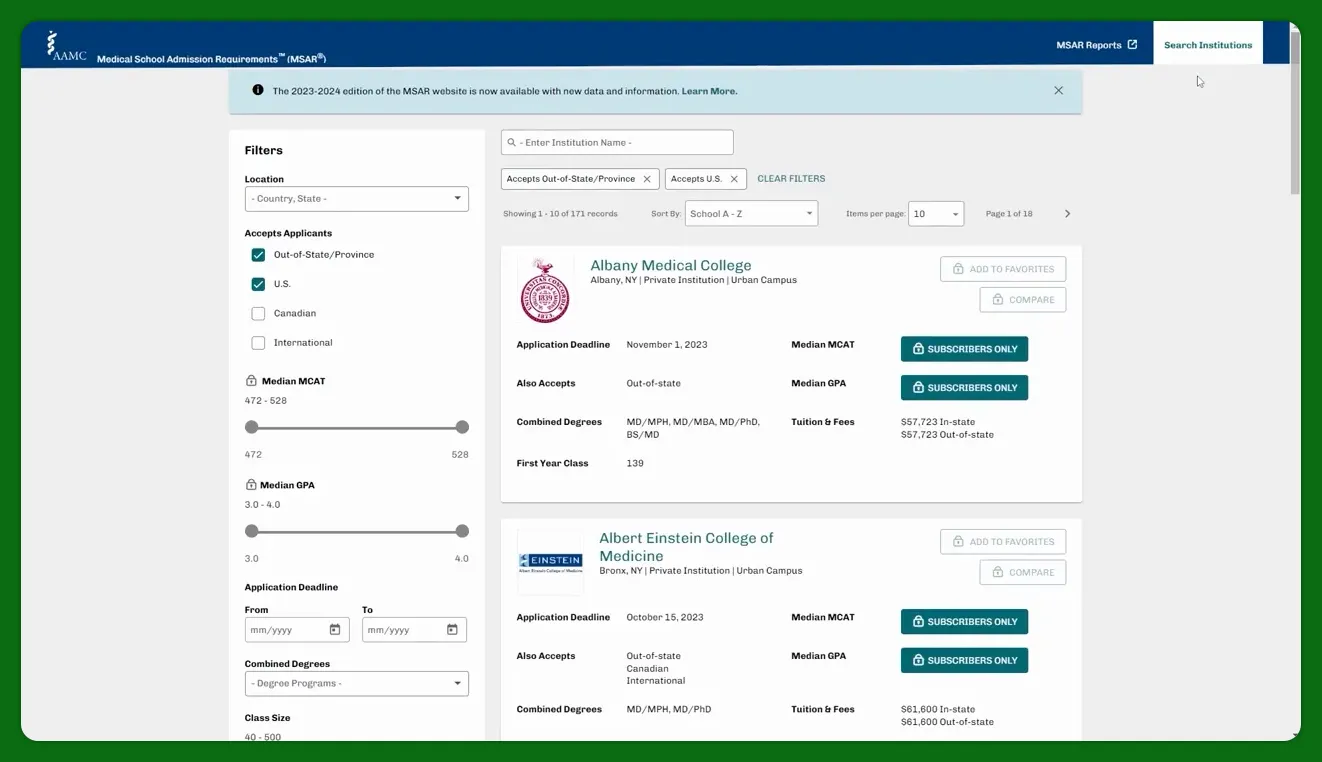
This is where data becomes especially useful. Many public medical schools have a strong preference for in-state applicants. If you are out of state, some of those applications may be long shots no matter how strong you are on paper.
That does not mean never apply out of state. It means be smart about it.
The MSAR from the AAMC is one of the best tools for this. It shows details like:
- How many students apply
- How many are interviewed
- How many matriculate
- In-state versus out-of-state patterns
- Tuition differences
- Curriculum and school details
If you need help with the MCAT side of planning your timeline before you even finalize your school list, this guide on when to start MCAT tutoring can help you think through timing more strategically.
For example, if you are from Ohio and considering multiple California public schools, you need to recognize that many of those schools heavily favor California residents. That does not make them impossible, but it may change whether those applications are worth your time, money, and energy.
Applying well is partly about ambition and partly about efficiency. A smart school list is one of the best ways to improve your odds at a T20 medical school and beyond.
3. Align your strengths with the school’s strengths
If there is one point that deserves extra emphasis, it is this one.
By the time a school sends you a secondary, and especially by the time you receive an interview, the school is already interested. At that stage, your job is not just to repeat how accomplished you are. Your job is to show why you belong there.
This is the difference between being impressive in general and being compelling to a specific T20 medical school.
Strong applicants make the case that:
- The school’s mission fits their values
- The school’s programs fit their interests
- The school’s culture fits their personality and goals
- Their background and priorities would add something meaningful to that community
That kind of alignment should shape your secondaries and your interviews. If a school emphasizes research, service to underserved communities, urban health, primary care, innovation, or a specific educational model, you should understand that well enough to explain where you fit naturally.
How to research school fit beyond the website
School websites are useful, but they only get you so far. They tell you what the school wants to present. What they do not always tell you is what the place actually feels like.
Some of the best insight comes from people who know the school firsthand:
- Current medical students
- Recent alumni
- Applicants or contacts from your undergraduate network
A T20 application is the same cycle, run earlier and tighter. Here is the cycle.
On its way.
Check your inbox in the next minute.
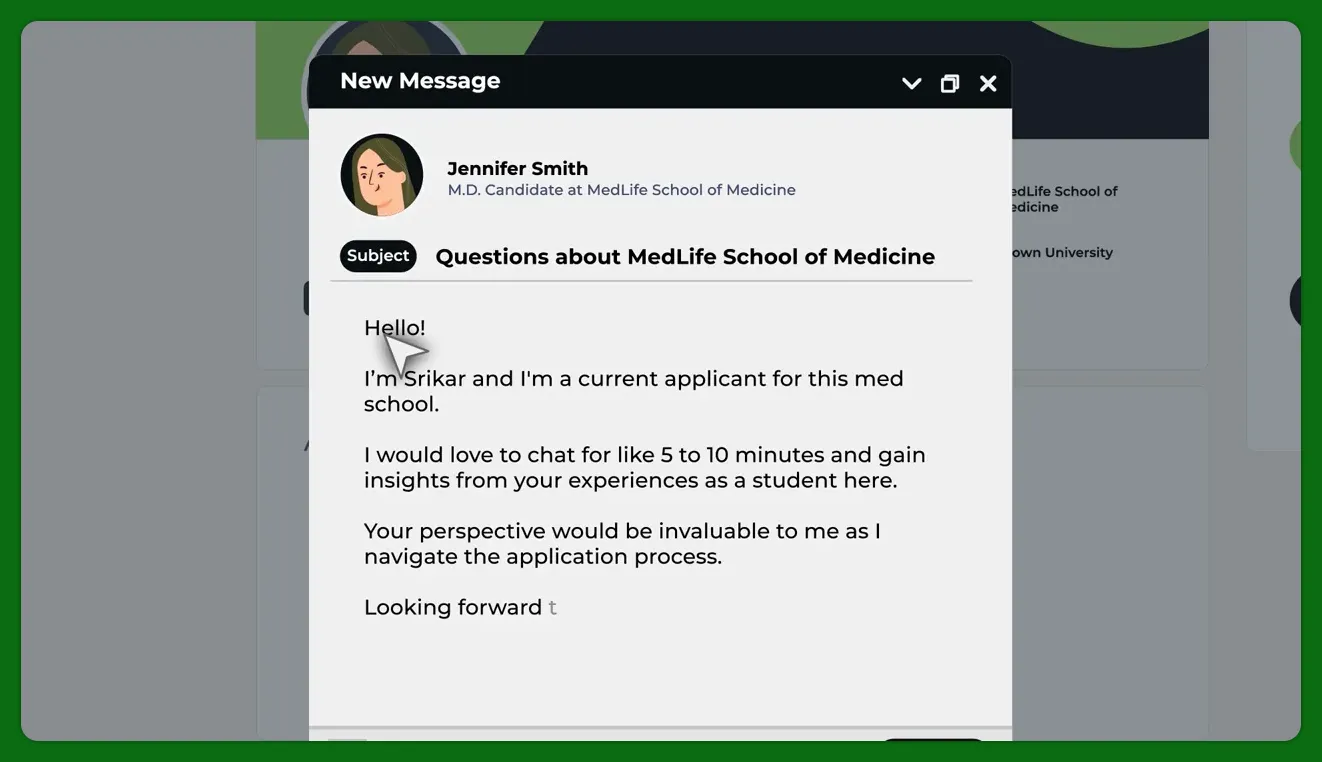
I found it especially helpful to reach out to people with some kind of existing connection. Maybe they attended my undergraduate institution and were now at a medical school I was targeting. That made the outreach feel more natural.
The message itself does not need to be long. It can be simple, respectful, and specific. You are just asking for a brief conversation about their experience and what stands out about the school.
You will absolutely get ignored sometimes. That is normal. Medical students are busy. Alumni are busy. Do not take a lack of replies personally.
But even a handful of conversations can give you insight that dramatically improves your essays and interviews. You start to understand the culture, the priorities, and the language that actually matters at that T20 medical school.
What meaningful experiences can look like
When people hear “build a strong application,” they often imagine a checklist of the same activities everyone else is doing. That is the wrong mindset.
The better question is whether your experiences reveal something consistent and believable about who you are.
For me, several of the most important experiences involved supporting children and underserved communities. That helped me articulate a growing interest in pediatrics and urban populations. Another major part of my college life was dance, which had nothing to do with medicine directly but still mattered because it reflected who I was and how I spent my time.
This is a good place to be honest with yourself. Your strongest experiences are usually the ones you would still care about even if no application existed.
If you are pushing through a heavy MCAT season while also building those experiences, it is worth protecting your energy. Resources on avoiding MCAT burnout and managing MCAT stress and anxiety can help you stay functional without turning the whole process into misery.
How to think about stats without obsessing over them
You should absolutely aim to be as competitive as possible for a T20 medical school. That means taking your GPA seriously and preparing well for the MCAT. But there is a healthier and more accurate way to think about numbers.
Think of stats as helping determine whether your application gets careful attention. After that, the question becomes whether the rest of your application justifies a yes.
So if your stats are strong, do not assume you are done.
If your stats are not ideal, do not assume you are out.
The real goal is to make sure your academics are solid enough while the rest of your application tells a story that feels cohesive, mature, and school-specific.
If you are still building your prep plan, these online MCAT resources can help you strengthen that part of your profile without wasting time.
Support makes this process easier
Applying to a T20 medical school can feel isolating, especially when everyone around you seems to have a different opinion about what matters most. Try not to do the entire process alone.
Lean on people you trust:
- Friends
- Family
- Professors
- Mentors
- Advisors
This process is long. It is much more of a marathon than a sprint. Support helps you think clearly, recover from setbacks, and stay grounded when applications start to consume too much mental space.
Additional resources for building a stronger application
If you want more structured support while applying to a T20 medical school or any medical school, medical school admissions coaching can help with strategy, essays, and interview preparation.
If the MCAT is the bottleneck right now, one on one MCAT tutoring may help you improve faster and study with more direction.
It can also be useful to see how other students navigated setbacks and still succeeded. These MCAT success stories are a good reminder that the path is rarely perfect.
For more planning tools and guides, check out these free med school admission resources.
If you want an outside sense of others’ experiences with MedLife Mastery, you can also browse independent reviews on Trustpilot.
FAQ
Do you need perfect stats for a T20 medical school?
No. Strong stats help, but they are not the whole application. A T20 medical school also evaluates fit, extracurricular depth, communication, and the clarity of your motivation for medicine.
Do publications matter for T20 medical school admissions?
They can help, but they are not required. Research experience can be valuable, yet many successful applicants do not have publications. What matters more is whether you can discuss your work with insight and genuine interest.
Is it bad if not all of your activities are medical?
Not at all. A T20 medical school does not expect every part of your life to revolve around medicine. Meaningful nonmedical experiences can make your application more authentic and memorable.
How important is school fit for a T20 medical school?
It is extremely important. Once you reach the secondary or interview stage, showing that your goals and values align with the school’s mission can make a major difference.
What is the best way to research a medical school before secondaries and interviews?
Use official sources like MSAR and school websites, but go beyond them. Speaking with current students or alumni often gives the clearest picture of a school’s culture, priorities, and day-to-day environment.
Should geography affect where you apply?
Yes. Geography matters both for your quality of life and for admissions strategy. Some public schools strongly prefer in-state applicants, and location can affect how happy and supported you feel during training.
Final thoughts
Getting into a T20 medical school is not about creating the most polished illusion of a perfect applicant. It is about building a strong academic foundation, choosing meaningful experiences, understanding your own story, and showing schools why you fit what they care about.
That is a much more human process than people often make it sound. And honestly, that is good news.