When you are deep in MCAT prep and a question stops you cold, the worst feeling is reading all four answer choices and thinking, “Great. These all look possible.” That moment can spiral fast if you do not have a system.
For Anna, the most reliable system was the process of elimination. Not as a magic trick. Not as a substitute for content. And definitely not as something to force onto every question. It is a structure you can lean on when your brain feels foggy, overwhelmed, or split between multiple choices.
If you want a strategy-first way to get better at that skill, this is exactly the kind of thinking Anna teaches in the 6-week live MCAT strategy course. The point is not just to know more. It is to make better decisions under pressure.
Do not use process of elimination on every MCAT question
This is the first mistake a lot of students make. If the answer is obvious and you know it right away, pick it and move on.
Do not turn a simple question into a philosophical debate with yourself. The MCAT is a timed exam. If a choice clearly stands out and you feel confident, trust that and keep going.
Process of elimination becomes useful when:
- You are unsure what the question is really testing
- Two or more answer choices look plausible
- You know some choices are wrong, but not yet which one is best
- You feel yourself freezing and need a repeatable system
That distinction matters because good MCAT strategy is not about doing the same thing every time. It is about matching the tool to the moment.
Eliminate fully or do not eliminate at all
This is the core rule. If you cross out an answer, it needs to be truly gone from your mental workspace.
Half-eliminating is where students get into trouble. They mark something off, but secretly still think, “Well... maybe.” That defeats the whole purpose. You are trying to reduce mental load, not create a fake sense of narrowing.
Only eliminate an answer if you are confident it cannot be correct.
That means no crossing out a choice just because it feels unfamiliar, sounds complicated, or is not your favorite. You need an actual reason it fails.
A good self-check is this: when you review practice questions, look for times when you ruled out the correct answer. If that keeps happening, your elimination standard is too aggressive.
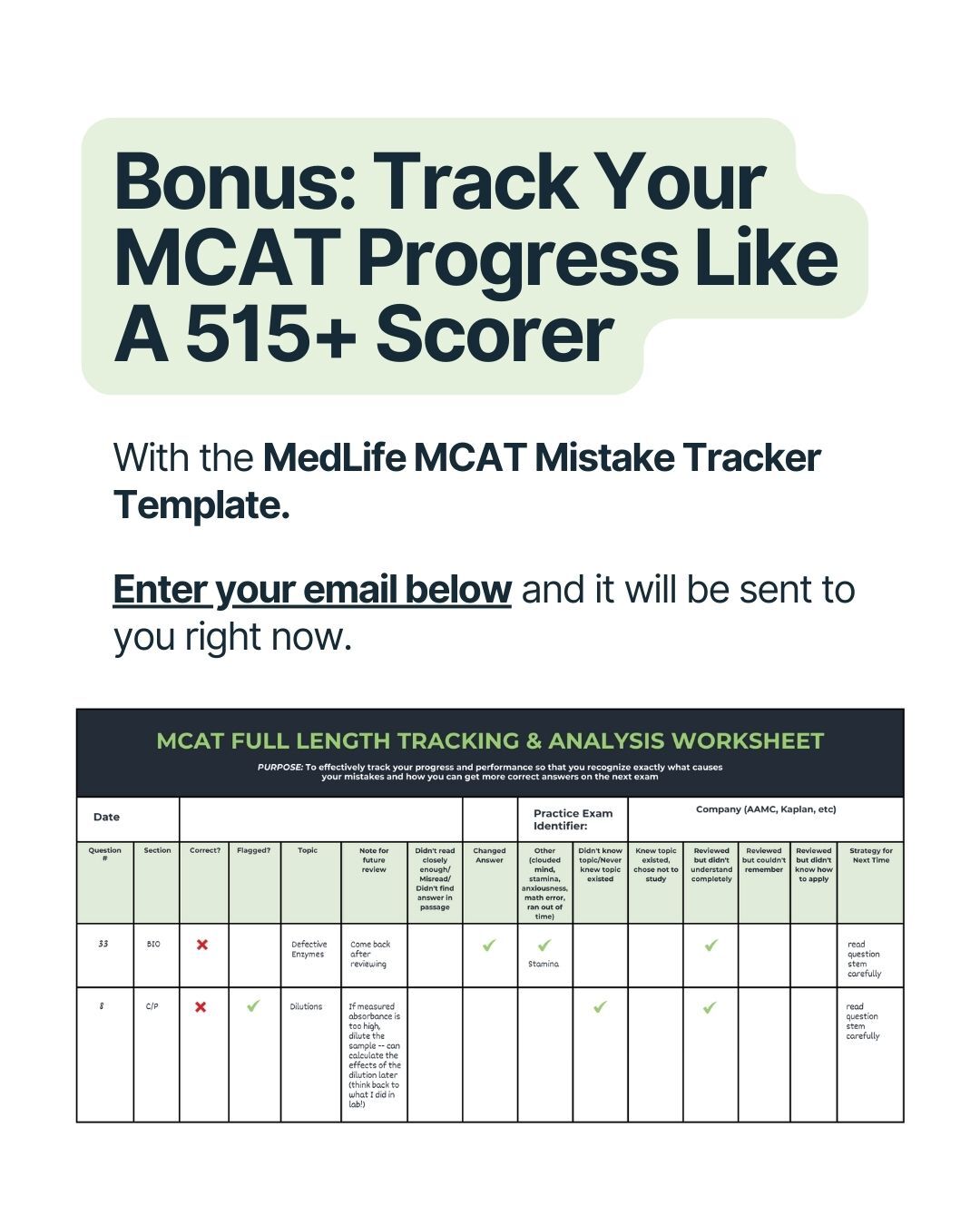
One of the smartest review habits is keeping track of errors systematically. If you want a framework for that, this guide on reviewing MCAT mistakes is worth using alongside your question review.
The goal is simple. If you eliminate A and D, then your real decision should only be between B and C. If you miss the question, it should be because you picked the wrong remaining answer, not because you later drifted back to something you supposedly eliminated.
Anchor yourself back to the question
This sounds basic, but it is one of the easiest things to forget.
You start reading answer choices, one looks tempting, another sounds familiar, a third triggers some fact you memorized three months ago, and suddenly you are no longer answering the actual question.
When you are actively comparing choices, reread the question stem. Ground yourself again.
You do not need to reread the question after every single answer choice. That would be overkill. But once you are deciding what stays and what goes, return to the stem and ask:
- What is the question actually asking?
- What task do I need to perform here?
- Am I picking the answer that is true, or the one that best answers this specific question?
This is especially important in CARS and passage-based science questions, where the exam loves answer choices that sound reasonable but are aimed at the wrong target. If you want more help sharpening that skill, this article on how to understand MCAT questions pairs really well with this strategy.
What to do when you are down to two answers
This is where a huge number of points are won or lost.
Once you have narrowed a question down to two choices, do not guess blindly. Use a two-step process.
1. Reread the question
Before anything else, make sure you know exactly what the stem wants. Not roughly. Exactly.
2. Compare what makes the two answers different
If both answers seem close, then the differences between them are where the test is hiding the decision point.
Summarize each answer in your own head. What is this choice really saying? How is it distinct from the other one? There is only one correct answer, so if the two choices are separate, there is a reason.
Sometimes one answer is technically true. It may even be supported somewhere in the passage. But that does not automatically make it the best answer.
The MCAT loves “technically correct but not best” answers. That is part of what makes the exam feel slippery. Your job is not just to find something that sounds right. Your job is to choose the answer that responds to the question better than the others.
That is why debating the final two choices is so valuable. You are not asking, “Can I defend this answer?” You are asking, “Why is this answer better than the alternative?”
A quick math shortcut with exponents
For calculation-heavy questions, especially in Chemical and Physical Foundations, process of elimination can save a surprising amount of time.
If the answer choices all have different exponents, focus first on the order of magnitude.
You often do not need the exact final number right away. If you can figure out the correct exponent, you can eliminate multiple choices instantly. That keeps you from wasting time doing full arithmetic when the exam is really testing whether you understand the scale of the result.
This also protects you from getting trapped by small math errors. A sign slip or multiplication mistake can throw off an exact answer, but if your exponent logic is solid, you can still stay on track.
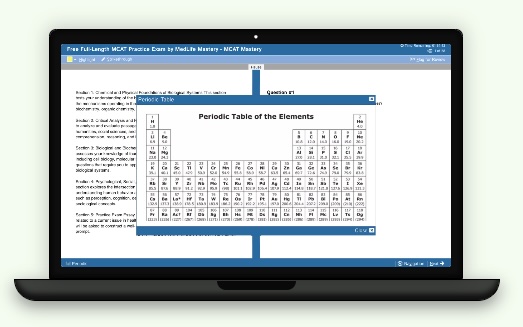
That kind of shortcut becomes much easier when you are practicing with realistic material. If you need more reps, the free MCAT practice test and the broader library of free MCAT resources are great places to train this under test-like conditions.
Use review to tell you whether your strategy is working
Process of elimination is not just something you do during a question. It is something you refine during review.
After practice sets or full lengths, ask yourself:
- Did I eliminate answers too early?
- Did I keep weak answers around for too long?
- Did I reread the stem before choosing?
- Did I confuse a technically true answer with the best answer?
- Did I cross out the correct answer at any point?
Those questions reveal whether the issue is content, reasoning, timing, or discipline. That is why we like using an error tracker instead of relying on memory.
If you want extra structure, the MCAT Master Map can help organize prep, and students who want more personalized help can look into 1-on-1 MCAT tutoring.
What this strategy is really for
The process of elimination is not about knowing every answer immediately. It is about having a reliable system when you do not.
The strongest MCAT students are not superhuman. They are not calm and certain on every question. They just know how to operate when they feel uncertain.
That is the bigger lesson here. Strategy gives you something to hold onto when pressure rises.
And that is why we keep coming back to strategy-first prep. If you are already doing content review and need help with passages, timing, answer choices, and AAMC logic, Anna is teaching the next 6-week live MCAT strategy course. It is built for exactly this kind of improvement, especially for students who feel like they know more than their scores are showing.
Additional resources
- Best MCAT practice exams if you are building out your full-length plan
- MCAT exam day strategies for staying composed when a section feels hard
- MCAT success stories if you need proof that score turnarounds really do happen
- Student reviews on Trustpilot if you want outside feedback on MedLife Mastery
One question at a time. One elimination at a time. That is how you stay clear, stay moving, and keep collecting points.
FAQ
Should I use process of elimination on every MCAT question?
No. If you know the answer confidently, choose it and move on. Process of elimination is best when you are uncertain or when multiple choices seem plausible.
How do I know if I am eliminating answer choices too aggressively?
Review your practice questions and check whether you crossed out the correct answer. If that happens repeatedly, you are eliminating before you have enough evidence.
What should I do when I am stuck between two answer choices?
Reread the question stem, then compare the two answers directly. Figure out what makes them different and decide which one answers the question better, not just which one sounds true.
Can process of elimination help with MCAT math?
Yes. When answer choices differ mainly by exponent or order of magnitude, identifying the right scale can eliminate several options quickly without doing the full calculation first.
Who is the 6-week live MCAT strategy course best for?
It is especially helpful for students who already have some content foundation and want to improve passage strategy, timing, CARS, and AAMC-style reasoning. Anna is teaching the next cohort, and the classes are recorded for anyone who cannot attend every session live.

 To help you achieve your goal MCAT score, we take turns hosting these