Chem/Phys is one of the two sections that trips up the most MCAT students we work with, along with CARS. If it’s pulling your score down, you’re in good company, and you can fix it!
We interview top scorers all the time, and we single out the ones who scored 130 or higher on a section to learn what they did there.
Below are the strategies our 130+ C/P scorers used, written so you can start on them today. Each one is a way to increase C/P score and get past the 129 mark yourself!
First, a quick look at what the section tests, so you know where the points are 🙂
Free videos
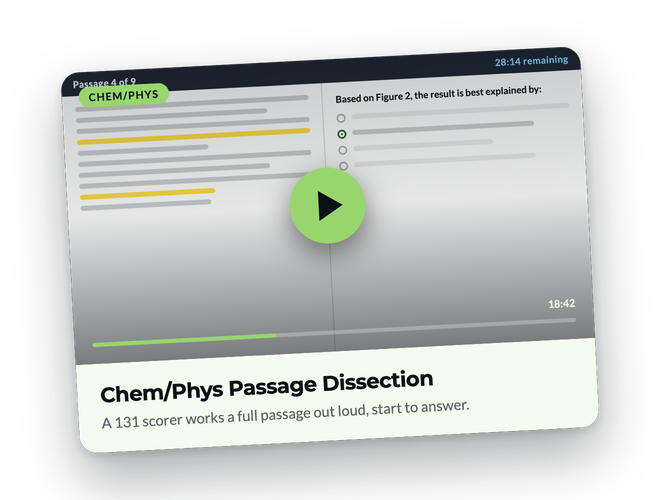
A 130+ in Chem/Phys starts with the method. Watch a 99th percentile scorer work a passage.
Free videos: the read, the eliminations and the commit, on a real Chem/Phys passage.
On its way.
Check your inbox in the next minute.
What Is the C/P Section of the MCAT?
C/P is short for Chemical and Physical Foundations of Biological Systems. It’s the first of the four MCAT sections, and it tests chemistry and physics as they apply to the human body.
Those numbers come from the AAMC’s C/P section overview and its score scale page. The AAMC also publishes where the questions come from, and general chemistry leads.
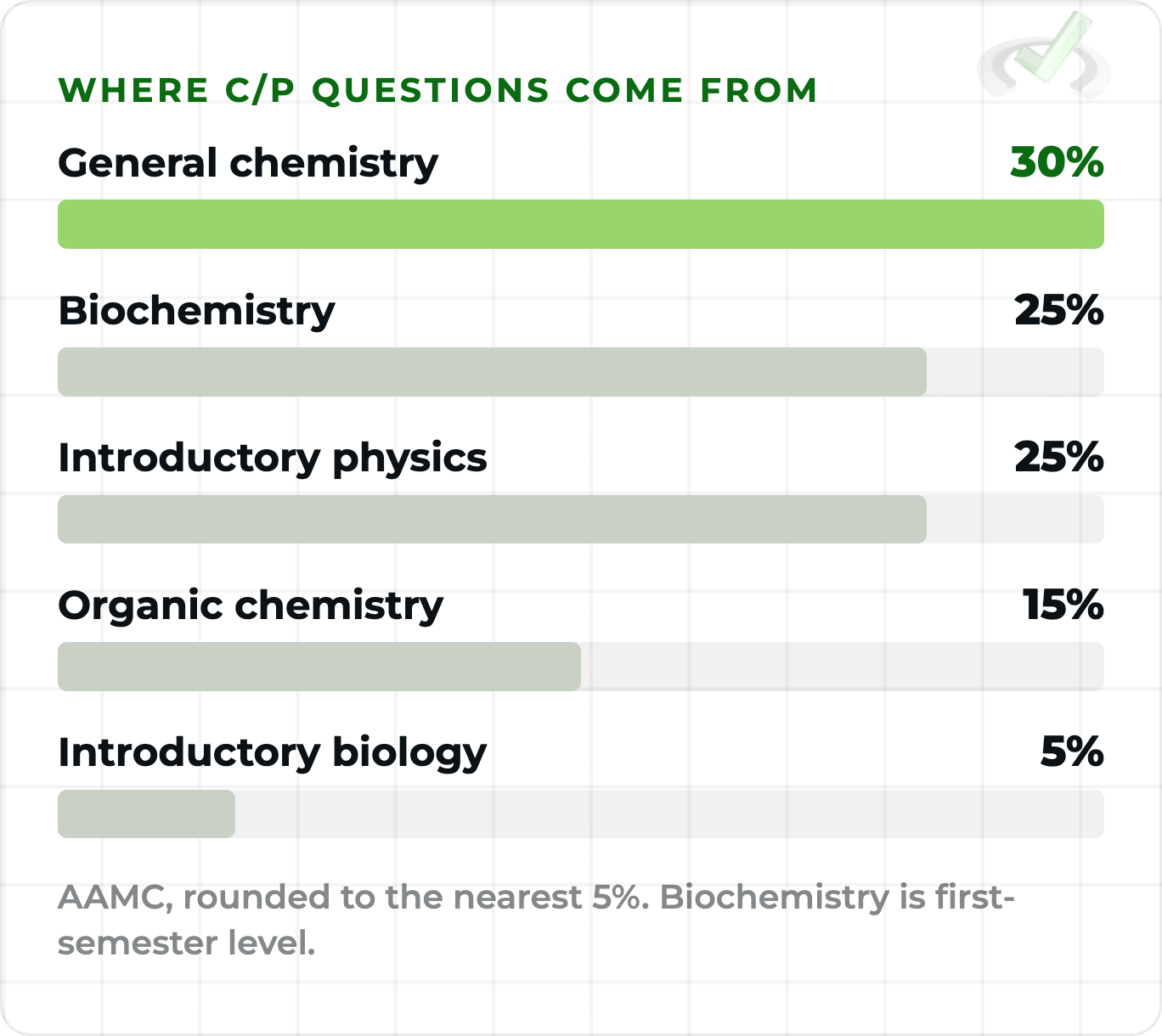
Biochemistry makes up a quarter of the section, so your Bio/Biochem review counts here too. The full topic list lives in the AAMC content outline, and it’s a great checklist for your review!
C/P opens your test day, so it’s the section you take with the freshest mind. Sit your practice sections in test order, C/P first, so test-day timing feels familiar.
Why C/P Scores Stall
Chem/Phys frustrates a lot of strong students. You think you understand the material, then a passage opens and everything looks foreign. Or the wording slows you down and the clock runs out before the last passage.
C/P is also a section where scores can plateau, and that stuck feeling is hard. We’ve been there, and you’ll get through it!
The 130+ scorers we’ve interviewed say the same thing. Once they changed how they approached passages, questions and review, the section stopped feeling impossible. The eight strategies below are the changes they made to increase C/P score, and you can use every one of them!
Strategy 1: Start With an Untimed C/P Section
A lot of low C/P scores come from timer pressure. You fall behind, you rush, and your reasoning gets sloppy. The fix our top scorers used sounds backward at first. Take one C/P section with no timer at all!
Work every problem calmly, math included. Read the passages and figures until you can reason to the answer. If you forget something, guess, make a note of it and move on.
You’ll often find the right answer was in your head the whole time, and that does wonders for your confidence!
Repeat the section with less time on each attempt. Keep going until you can hold that same accuracy in 95 minutes, the time the AAMC gives you. Every round gets a little easier!
Strategy 2: Pace C/P One Passage at a Time
Running out of time on Chem/Phys often starts with one passage that eats ten or twelve minutes. A plan for each passage stops that early, and pacing practice helps you increase C/P score too.
With 59 questions in 95 minutes, you’ve got about 1.6 minutes per question.
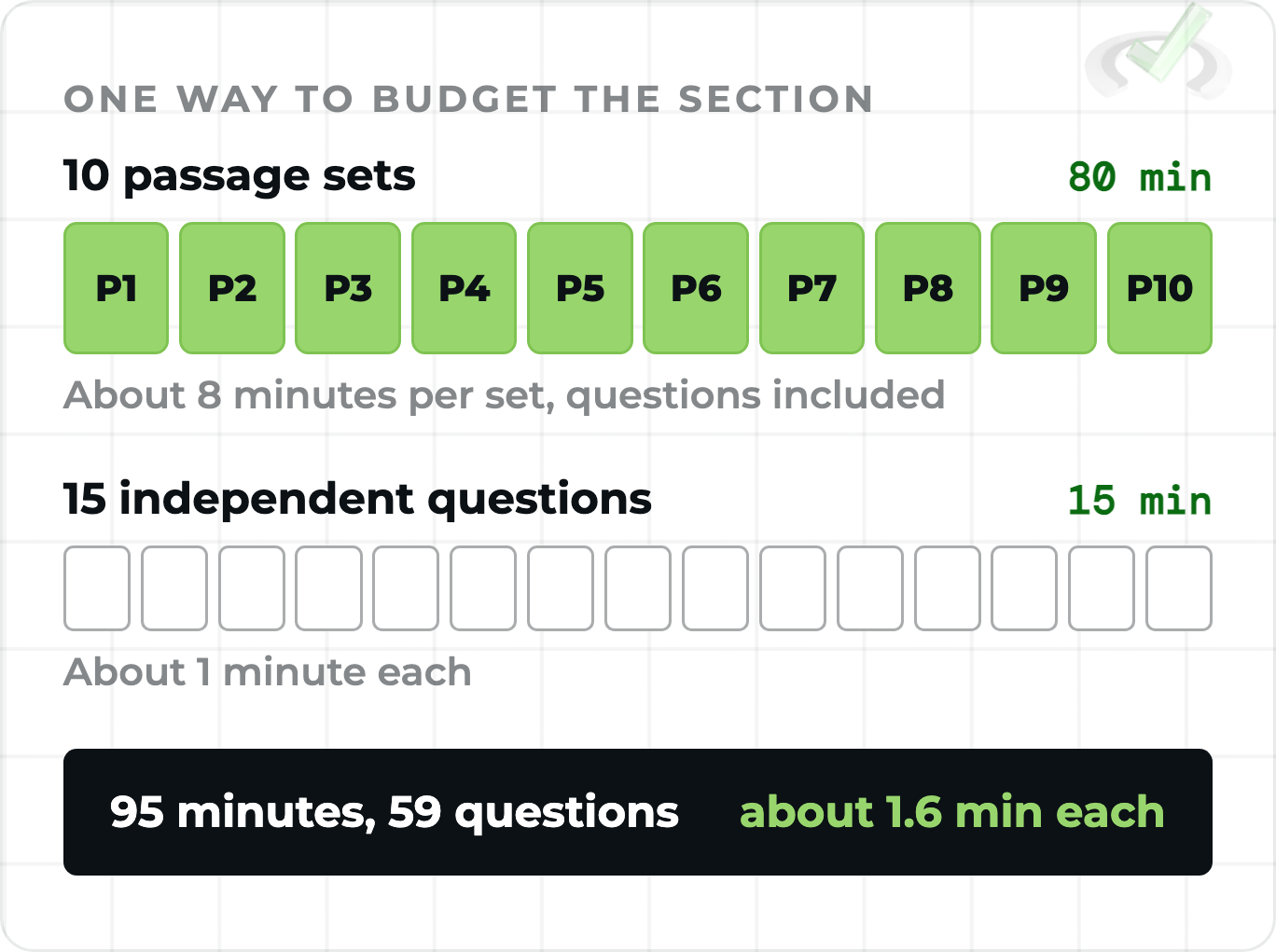
That budget gives each passage set about 8 minutes and each independent question about a minute. If a problem runs past a minute and you’re still setting it up, treat that as a red flag. Guess, flag it and come back if time allows.
Our guide to MCAT passage timing covers clock checks for every section. (Optional) If you’d like to build pacing with a group, our 6-Week Live MCAT Accelerator works live passages in every section to build pacing endurance. It’s a fun way to practice!
Strategy 3: Get Fast at Math Without a Calculator
You won’t have a calculator on test day. The AAMC lets you bring only your ID and glasses into the room, plus the noteboard and marker the test center hands you.
The good news is that the math the AAMC lists stops at Algebra II, with no calculus. Most C/P calculations are one or two steps, and the answer choices are usually far enough apart to estimate. That’s a relief!
- Round early. 6.626 becomes 6.6, and 9.8 becomes 10 when the choices allow it.
- Work in scientific notation. Multiply the front numbers, then add the exponents.
- Know your metric prefixes cold. Converting between powers of 10 shows up all over C/P.
The table below has the prefixes you’ll see most. They’re quick to learn!
Strategy 4: Let the Units Solve the Problem
Our top scorers rank unit work among the most useful C/P skills, and the AAMC lists dimensional analysis as a tested math skill. Write the units next to every number, every time.
When you can’t remember an equation, look at the units in the answer choices. Then combine the numbers you were given until their units match. It feels like a cheat code the first time it works!
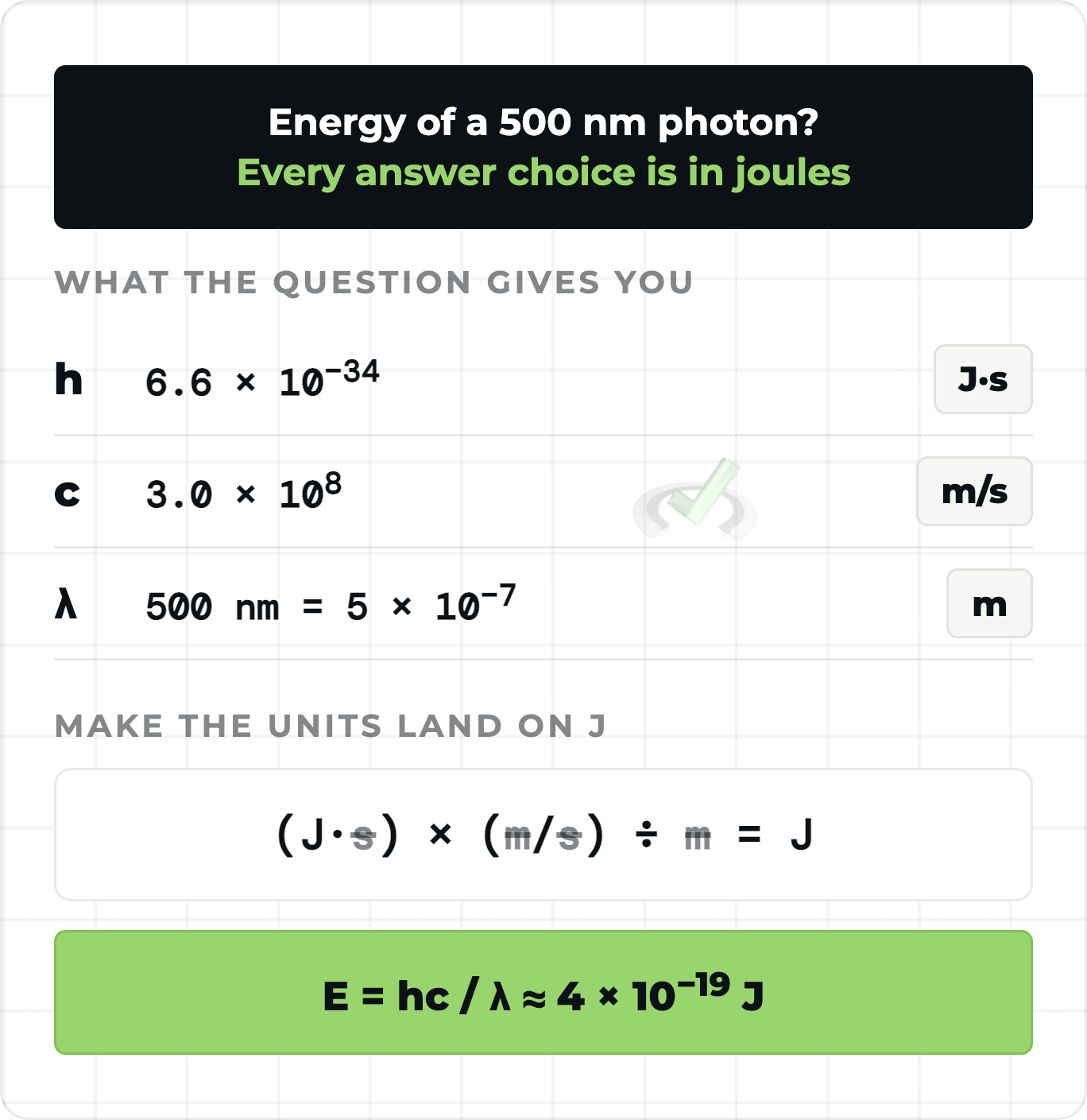
In the example, joule-seconds times meters per second gives joule-meters. Dividing by the wavelength in meters leaves joules, so the equation has to be E = hc/λ. You rebuilt it from the units alone!
Our Chem/Phys & Bio/Biochem Mastery Course has a full lesson on solving C/P with units, taught by a 132 C/P scorer. It walks through many more problems like this one :)
Strategy 5: Build the Foundations, Then the High-Yield Topics
Start broad. Get a conceptual grip on each topic before you chase details, especially early in your prep.
Once the basics feel solid, give extra hours to high-yield topics like redox, acids and bases and electrochemistry. Then work outward to the smaller details on the outline.
You don’t have to be a chemistry or math genius for this section. If you’re taking a chemistry or physics course right now, use it to learn those concepts in depth!
Leaving a topic out can cost you, though. Peter, a chemistry major who went from 499 to 513, spent the least time on C/P because it was his best practice section. On test day, he was surprised by how much organic chemistry showed up.
I figured that it would be low yield. If I could do this differently, I would never assume that a certain topic would not come up just because it is considered “low yield”.
There is no low yield on the MCAT and anything on the AAMC outline is fair game!
Peter K. 513 MCAT
Strategy 6: Review Every C/P Miss by Its Cause
The 130+ C/P scorers we’ve interviewed keep coming back to practice, because this is a section where practice pays off fast. Do as many C/P problems as you can, then review every one, right or wrong.
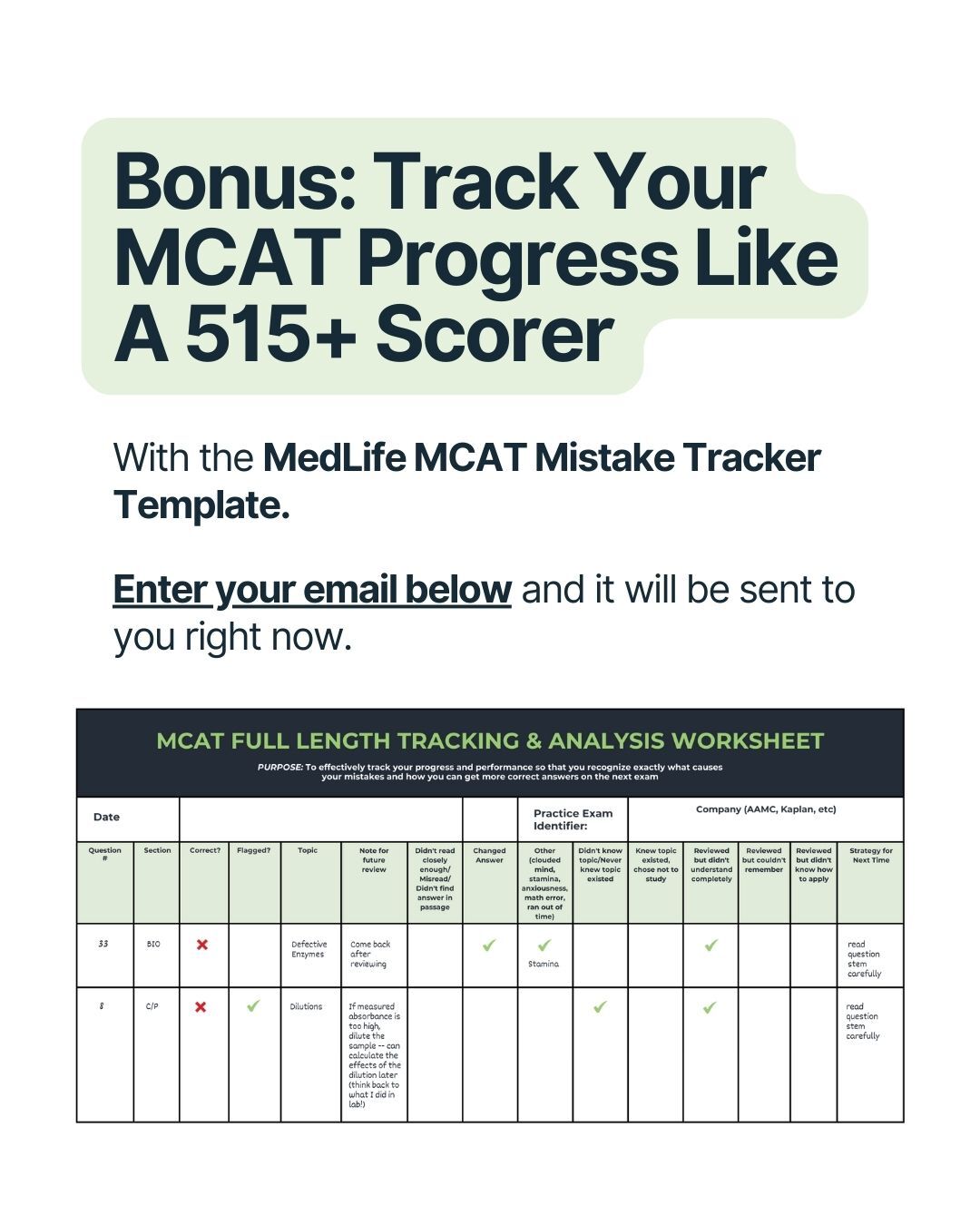
For each question, work out why you got it right or wrong, and read the explanation even when you were right. Then sort each miss by its cause. It’s the habit that helps you increase C/P score week after week!
Track the causes for a week or two. A pattern shows you where your next points are.
If your misses don’t fit a pattern, a few 1:1 tutoring sessions with a 515+ scorer can help. Your tutor reviews your missed questions with you and spots what you can’t see yourself. That’s what we’re here for!
Review every question you do, right or wrong. Give review as much time as the questions took, and you’ll see the patterns sooner!
Strategy 7: Understand Every Equation You Memorize
The physics equations on C/P are short, like F = mg for weight or E = hf for a photon. Knowing when to use one counts as much as knowing it.
MCAT mnemonics help you memorize, so use them as much as you need. Then make sure you can explain each equation in words, because the MCAT asks you to apply concepts in ways you haven’t seen before. You can do this!
Annabella raised her MCAT from 496 to 515 while working full time, and C/P started as her worst section. She finished with a 129 in it!
I think because C/P started as my worst I just really focused on practice problems and I made quizlet flashcards of different equations that were essential to know.
Annabella D. 129 Chem/Phys
Our guide to MCAT flashcards shows you how to build a deck like hers.
Memorizing an equation is step one. Knowing what each variable means and when the equation applies is step two, and C/P tests step two. You’ve got this!
Strategy 8: Read C/P Passages for the Concept
C/P passages can look strange, with unfamiliar experiments and long lists of numbers. Read for the concept the passage is built on, let the unfamiliar lines go, and then head to the questions!
When a passage looks bizarre, the questions often test a basic idea you already know. Look for the small detail that points to it. Miriam scored a 130 in C/P and raised her MCAT from 489 to 509, and this is how she read passages.
It is very easy to get overwhelmed with the physics and chemistry because a lot of the passages contain difficult info.
If you learn to brush the difficult concepts away, and focus on the main concepts that you have already established, you can get the answer right.
My biggest strategy was not getting caught with the difficult equations and concepts of each passage.
Many of the questions, even though they were passage based questions, could be considered stand alone questions.
Miriam A. 130 Chem/Phys
She also found that C/P kept testing the same concepts in new words. That’s great news for you!
…for the MCAT, I consistently scored highest in Chem/Phys during my practice, because I figured out that it was always the same concept tested in different words.
The Organic Chemistry was always the same with different molecules. I learned to master the concepts before practicing and testing myself.
Miriam A. 130 Chem/Phys
The free video near the top of this page shows a 99th percentile scorer working a full C/P passage this way. Give it a watch!
The Best AAMC Practice for C/P
The AAMC writes the exam, so its official practice products are the closest you’ll get to test-day questions. These are the ones with C/P questions in them.
- Chemistry Question Pack. 120 passage-based and independent chemistry questions.
- Physics Question Pack. 120 passage-based and independent physics questions.
- Section Bank, Volumes 1 and 2. 100 questions from each science section in each volume.
- Independent Question Bank. 150 questions, including 25 each in chemistry and physics.
- Full-length practice exams. Practice Exam 1 and the Unscored Sample Test are free, and Practice Exams 2 to 6 cost extra.
For more questions, try our free MCAT chemistry practice questions and MCAT physics practice questions. When a concept won’t stick, Khan Academy’s MCAT videos are a free place to relearn it.
Keep at least two AAMC full-lengths for your last few weeks. Fresh, test-like questions near the end tell you how ready you are! Our MCAT practice test guide shows how to space them.
How to Increase C/P Score: Quick Answers
What is C/P on the MCAT?
C/P is Chemical and Physical Foundations of Biological Systems, the first section of the MCAT. It has 59 questions in 95 minutes and covers general chemistry, biochemistry, physics, organic chemistry and some biology.
Is a 126 or 127 in Chem/Phys good?
Both are above 125, the midpoint of the 118 to 132 scale. Whether it’s good for you depends on your target total and your schools, and our guide to what makes a good MCAT score helps you set one.
Can you use a calculator on the C/P section?
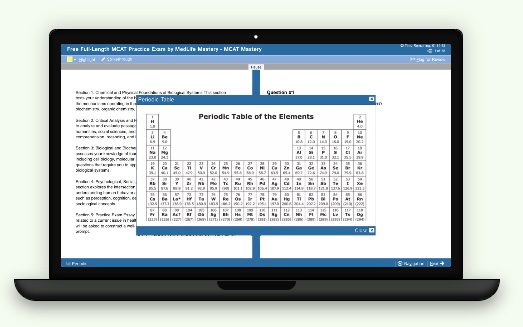
No. The AAMC allows only your ID, glasses and the test center’s noteboard, marker and earplugs. You do get a periodic table on screen.
How long does it take to increase C/P score?
It depends on where you start and how many hours a week you have. Annabella studied for 10 weeks while working full time, and C/P went from her worst section to a 129. Steady practice and review add up!
Final Thoughts on How to Increase C/P Score
Chem/Phys can feel like a wall, and plenty of students who now score 130+ felt that way once. You can increase C/P score with steady habits.
Take an untimed section, pace each passage, lean on units, and review every miss by its cause. We’re cheering you on!
Our Chem/Phys & Bio/Biochem Mastery Course teaches these strategies step by step, with 130+ scorers walking through AAMC C/P passages line by line.
If you’d rather have someone look at your misses with you, 1:1 MCAT tutoring pairs you with a 515+ scorer. We’d love to help you get there :)
Working on more than one section? Our guides to raising your CARS, Bio/Biochem and Psych/Soc scores, and our complete guide to increasing your MCAT score, pair well with this one. You’ve got this!
Watch the Chem/Phys passage dissection
On its way.
Check your inbox in the next minute.

 To help you achieve your goal MCAT score, we take turns hosting these