Six months gives you time to study for the MCAT at a pace that fits around a full-time job or a full course load. You get room to relearn content you haven't seen in years, and room to breathe when life gets busy 🙂
This 6-month MCAT study plan lays out all 24 weeks in two-week blocks, from your diagnostic to test day. It also includes a 5-month version, and shows how to keep a long plan from stalling.
How to Study for the MCAT in 6 Months: The 6-Month MCAT Study Plan
A 6-month MCAT study plan suits students who can give the MCAT fewer hours each week, or who have more content to rebuild!
Who This 6-Month MCAT Study Plan Is For
- Your test date is about 24 weeks away, or about 20 weeks for the 5-month version.
- You work full-time or carry a heavy course load, so 12 to 18 hours a week is what you can give the MCAT.
- You finished the prerequisites a few years ago, or your diagnostic came back well below your goal.
With 20 hours a week, our 4-month MCAT study plan gets you there sooner, and with 25 or more, our 3-month MCAT study plan does. Pick the one that matches the hours you have, and you'll be in great shape!
Our guide on how to study for the MCAT covers the five phases every plan follows, and this plan keeps them in the same order.
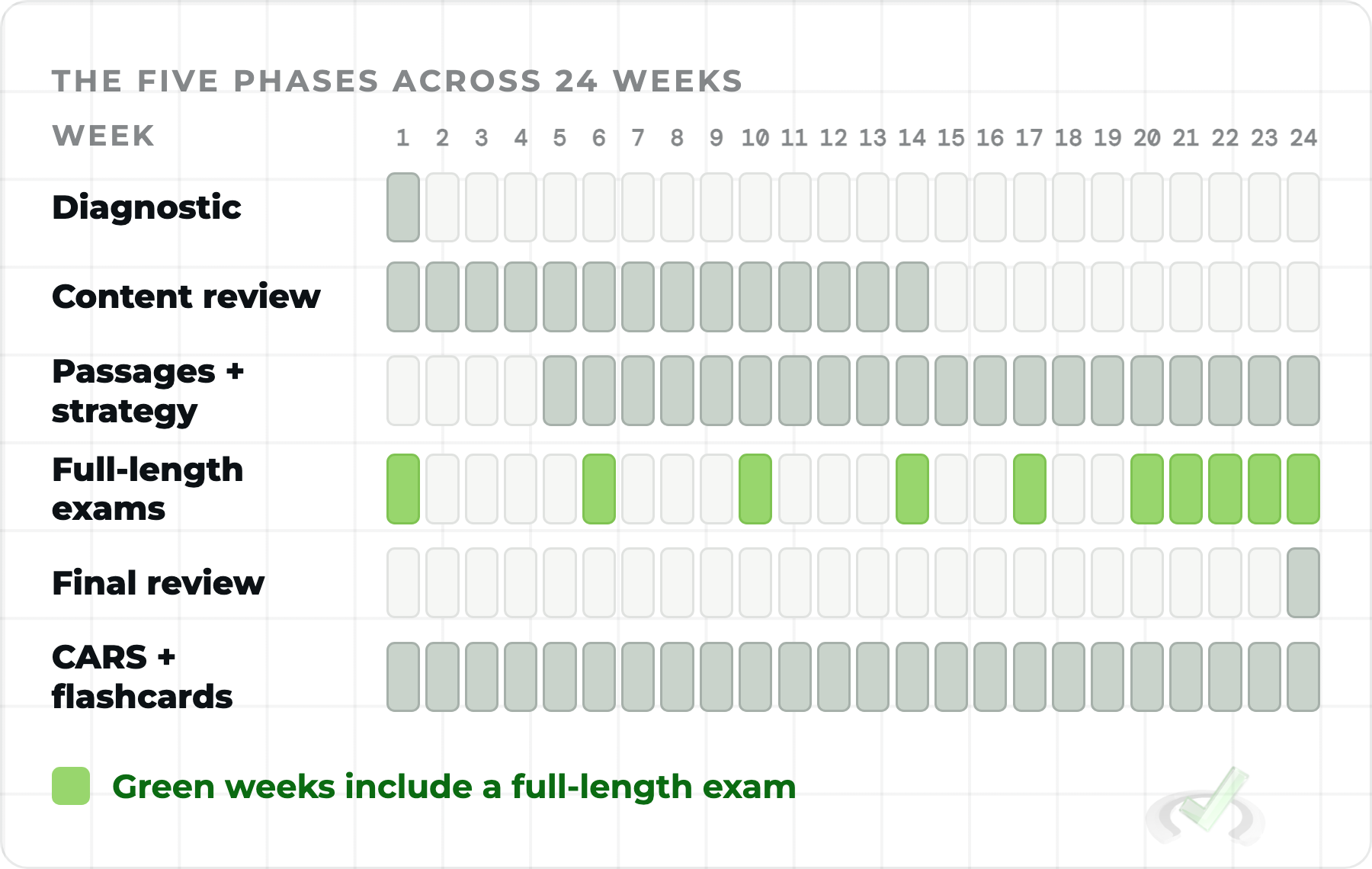
Week 1 is your diagnostic. Weeks 1 to 14 are content review, with timed passages from week 5. Weeks 15 to 19 are for practice and strategy, weeks 20 to 24 bring one AAMC full-length exam a week, and you'll rest in the last week!
How Many Hours a Week the 6-Month MCAT Study Plan Takes
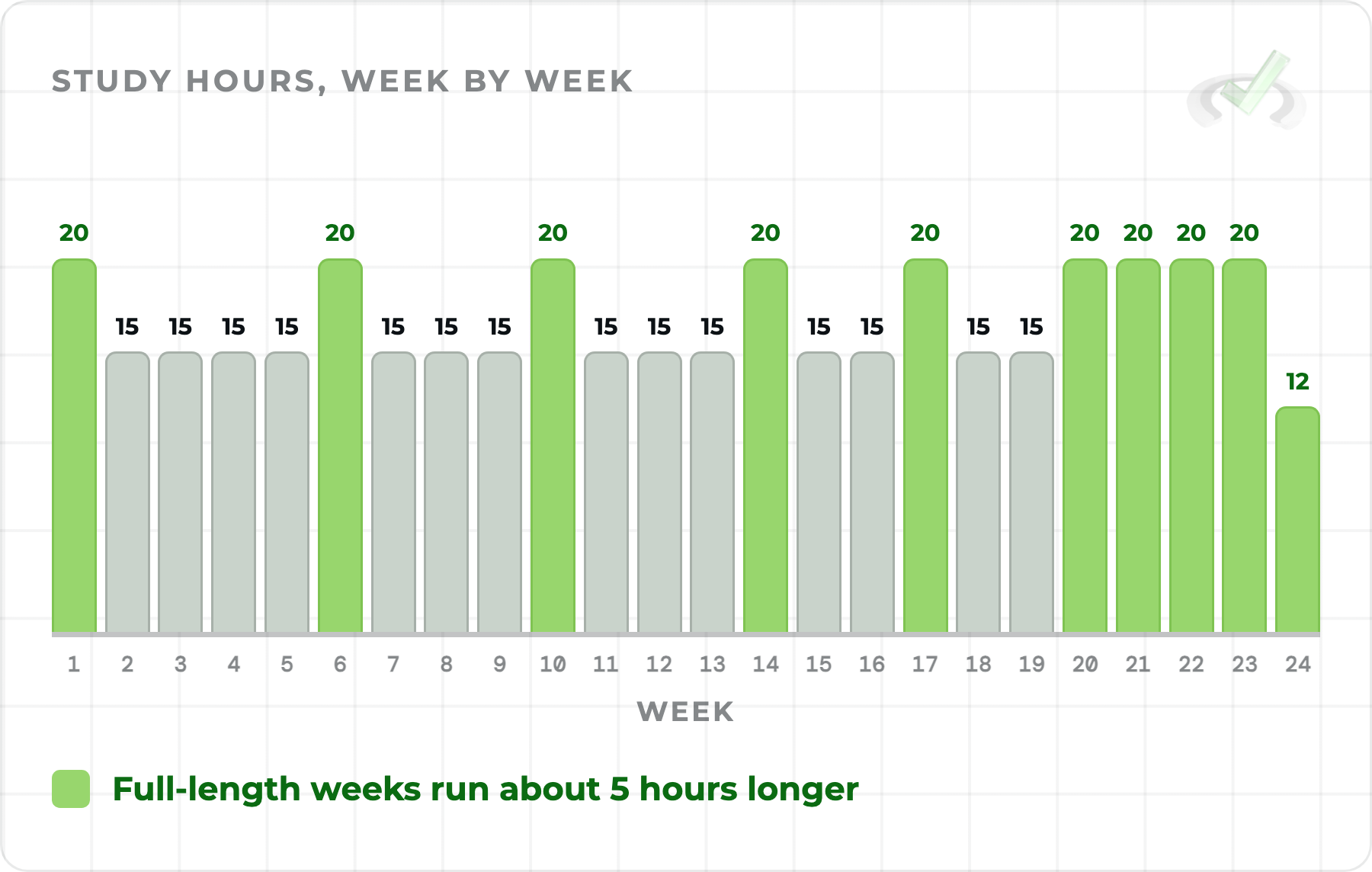
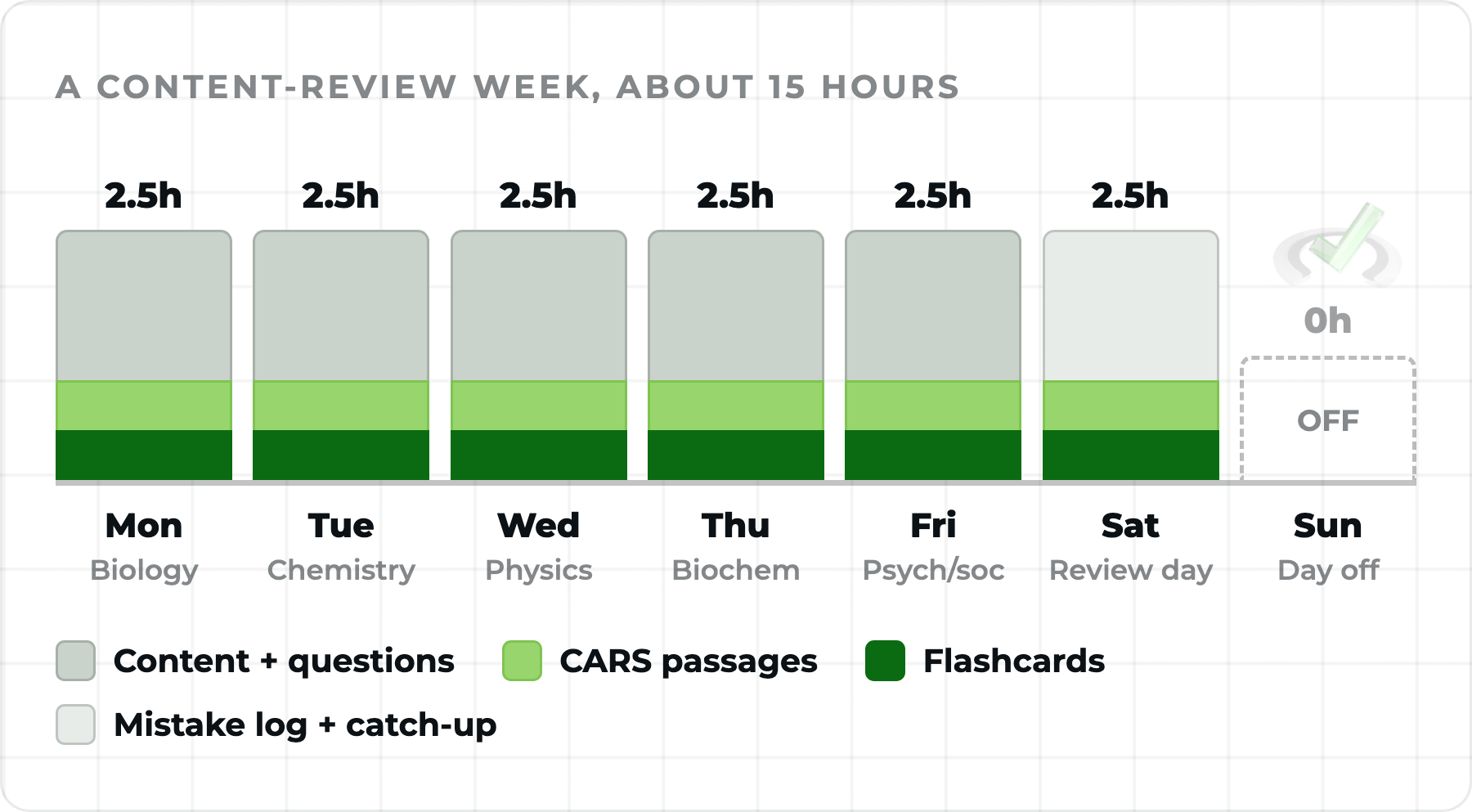
Plan on about 15 hours in a normal week and about 20 in a week with a full-length exam. The exam itself takes about 7.5 hours, and a careful review takes most of another day.
Across the 24 weeks that adds up to about 400 hours. That's more than our shorter plans, because this one leaves room to rebuild content!
About two and a half hours a day, six days a week, with one day off. That's two hours before or after work and a half hour of CARS at lunch. Some of the top scorers we've interviewed studied around three hours a day on top of a full-time job 🙂
Week-by-Week 6-Month MCAT Study Plan
Each row below covers two weeks, so all 24 weeks of the 6-month MCAT study plan fit in twelve rows!
Every content week touches each science subject, and CARS and flashcards run every day of the plan.
Each row of the 6-month MCAT study plan covers two weeks, so split its topics across them in the order listed, about one topic a day. Anything that runs over goes on the review day at the end of that week!
The 5-Month MCAT Study Plan Version
With about 20 weeks, keep the same order and take the extra time out of content review and the practice weeks. You'll do about the same work, so each week runs about three hours longer.
Here's how the 5-month MCAT study plan lines up against the 6-month MCAT study plan!
Use the AAMC Unscored Sample Test as your week 1 diagnostic, a third-party full-length in week 6, AAMC Practice Exam 1 in week 12 and another third-party exam in week 14. Then take AAMC Practice Exams 2 to 6 one a week from week 16, with the last one early in week 20.
For a look at how one student used five months, Chrysalis talks through her 5-month MCAT journey on our podcast!
When Full-Length Exams Start in a 6-Month MCAT Study Plan
Take one full-length at the very start as your diagnostic, then one every four weeks or so as a checkpoint, in weeks 6, 10, 14 and 17. From week 20, take one a week until test day. That's ten full-lengths in all!
Each AAMC practice exam is built from questions on past MCATs. Saving the five you buy for the last five weeks gives you the most realistic read on your score right before test day.
In the practice weeks, the AAMC's Section Bank and its Biology, Chemistry and Physics Question Packs make good timed sets. For CARS, the AAMC's new CARS Question Bank replaced its old question packs, so that's where your official CARS passages come from now.
Review each exam as long as you spent taking it, and our guide to reviewing MCAT practice tests shows how top scorers do it!
(Optional) If you'd like to practice passages with a mentor, our 6-Week Live MCAT Accelerator lines up with the last six weeks of this plan, and every class is recorded.
How to Adjust Your 6-Month MCAT Study Plan If You Fall Behind
Over 24 weeks, something will come up, like a work trip, finals or a cold. That's okay! Here's how to catch up.
- A topic ran over. Finish it on that week's review day and keep the next week's topics on schedule. Keep CARS and your flashcards going every day.
- You lost a week. Drop to CARS and flashcards that week, then spread the missed topics across the review days of the next three or four weeks. You'll be back on track in no time!
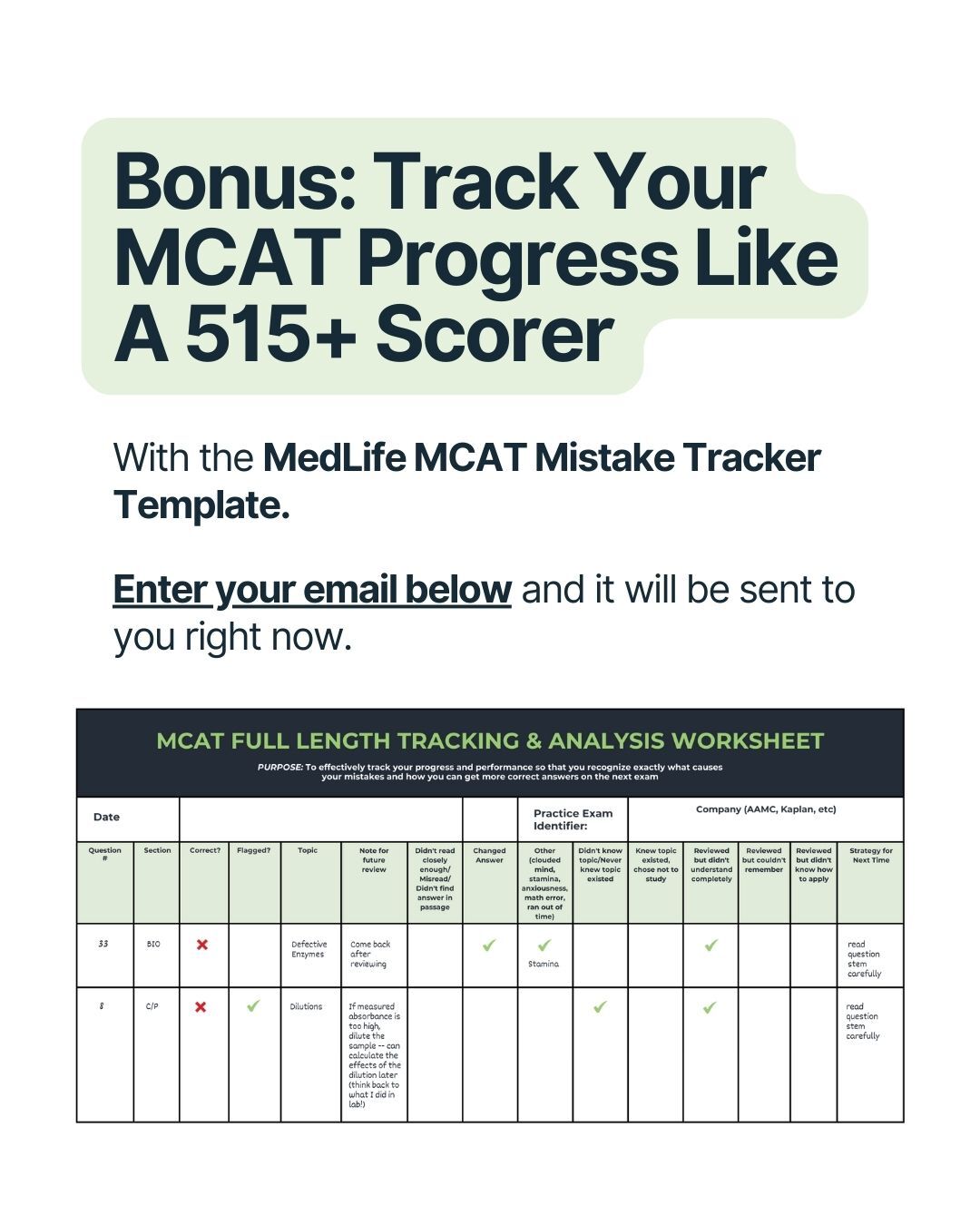
- Your checkpoint score didn't rise. Spend a review day sorting your mistake log by cause. Content misses go back to practice questions, and timing or misreading misses get more timed passage sets.
If you'd like a 515+ scorer to look over your mistake log with you, our 1:1 MCAT tutoring lets you book a session whenever you hit a wall 🙂
How to Keep a 6-Month MCAT Study Plan From Stalling
On a plan this long, you'll want to watch for burnout. Around months two and three, the diagnostic is a distant memory, test day still feels far away, and studying starts to feel like a second job.
A few habits keep a 6-month MCAT study plan moving, and none of them take long!
- Keep your day off. One rest day a week is part of the plan, and skipping it tends to cost you more days later.
- Use the checkpoints as finish lines. Each checkpoint shows you how far you've come, so mark it and celebrate a little!
- Rotate subjects day to day, so one hard subject never fills a whole day.
- Study with someone. A study partner or an MCAT study group helps with accountability over six months, and explaining a topic out loud shows you what you've got down.
Around weeks 9 and 18, take a week at about half your usual hours, with CARS, flashcards and one review day. There's room for it in the plan, and you'll come back to the content fresher!
If you notice yourself rereading the same page three times, dreading sessions, or seeing flat scores for a month, take two lighter days before you push on. Rest counts as part of the plan!
Our guide to MCAT burnout covers more ways to stay motivated, and our Anki guide shows how to keep flashcard reviews short on busy days.
6-Month MCAT Study Plan FAQs
Is 6 months too long to study for the MCAT?
No, it isn't, if you can only give it 12 to 18 hours a week, or you have a lot of content to rebuild. If you can give it 20 or more, our 4-month plan covers the same work in less time.
How many hours a week does a 6-month MCAT study plan take?
About 15 in a normal week and 20 in a full-length week, around 400 hours in all.
Can I follow a 6-month MCAT study schedule while working full-time?
Yes, it's built for that! Two hours on weekdays and five on Saturday gets you to 15, with Sunday off. Our guide to studying with work and school has more on fitting it in.
Is 5 months enough to study for the MCAT?
Yes, for most students it is! The 5-month version above runs about 18 hours a week, around 390 hours in all.
When should I take my first full-length exam on a 6-month MCAT study plan?
In week 1, before you start content review. It's your diagnostic, so a low score is completely normal and tells you where to spend your time 🙂
Will I forget the early content by test day?
On a 6-month MCAT study plan, daily flashcards, the second pass in weeks 15 to 19 and the checkpoint exams all bring the early topics back around, so they stay fresh 🙂
For more on each phase, from the diagnostic to test week, see our full guide on how to study for the MCAT. Our other plans cover 1 month, 2 months, 3 months and 4 months.
If you'd like to work through passages live with a 515+ scorer, our 6-Week Live MCAT Accelerator practices live passages in every section. And if the cohort dates don't line up with your plan, 1:1 MCAT tutoring works around your schedule. You've got this 🙂

 To help you achieve your goal MCAT score, we take turns hosting these