Thinking about joining or starting an MCAT study group? Studying with other people can make prep a lot less lonely, and it can help you remember more of what you learn!
If you're after a full plan for the exam itself, our guide on how to study for the MCAT walks through every phase, from your first diagnostic to test week.
This page covers the rest. You'll see whether a group fits you, how to find or form one, the right size and roles, a weekly agenda, and the signs it's time to change something.
Is an MCAT Study Group Worth It?
For a lot of students, yes! An MCAT study group gives you three things that are hard to get on your own, and it can also eat hours if it isn't run well.
- You learn more by explaining. In a 2014 study, people who expected to teach a passage recalled more of it, and organized it better, than people who expected a test (Nestojko and colleagues, Memory & Cognition).
- You get quizzed. A large review of study techniques rated practice testing as one of the two most useful, and rated rereading and highlighting low (Dunlosky and colleagues, 2013). Groupmates asking you questions is practice testing.
- You show up. A session on the calendar is harder to push to tomorrow than a plan that only lives in your head.
- You're not alone in it. MCAT prep can feel lonely, and people at the same stage understand the worries and anxiety that come with it 🙂
The costs are time and drift. Travel, small talk and a group that's weeks behind you all take hours from your own plan, so the group has to earn its spot on your calendar.
- You test within a month or two of the people you'd study with
- You lose steam studying alone, or keep pushing your schedule back
- You can protect two to six hours a week for group time on top of your solo hours
- You're willing to teach a topic out loud, even one you're shaky on
Solo Study vs an MCAT Study Group
You'll still do most of your MCAT prep alone. Here's where a group adds something, and where solo work is the better fit!
How to Find an MCAT Study Group Online or Near You
Online
- Reddit. The r/Mcat subreddit gets regular posts from people forming groups. Search for your test month, or post your own with your date, your hours and your time zone. You'll often get replies within a day!
- Discord servers. Large MCAT servers on Discord are good for quick questions and finding people. Once you've found two or three who fit, start a small channel or call of your own.
- Video co-working. A camera-on call with microphones muted, where everyone works on their own plan, helps on days you'd otherwise stall. It's hard to scroll your phone with three people watching lol
In person
- Your premed club or pre-health advising office. Ask whether anyone has a group forming for your test date.
- Classmates and coworkers. Someone in your biochem class, lab or job may be testing the same month.
- A room you can talk in. Campus and public libraries often have study rooms you can book. Cafes are fine for solo work, and a group needs a place where it can talk out loud.
How to Form an MCAT Study Group in 5 Steps
- Match test dates. Aim for people testing within a month or two of you, so your content review and full-length weeks line up.
- Share diagnostic scores. Everyone takes one timed practice exam first. The AAMC's free Unscored Sample Test works, and our MCAT score calculator turns it into a scaled score. Sharing section scores shows who can help with what!
- Keep it to three or four people. More on size below.
- Write down your goals. Agree on test dates, a target score for each person, how often you'll meet and how long each session runs.
- Pick a place and a platform. A booked room, or one video call link and one group chat, so nothing gets lost across four apps.
Similar scores make it easier to keep the same pace, and different strengths can work just as well!
Say you're scoring a 505 and a groupmate is scoring a 495. If she has a 127 in Biology/Biochemistry and you have a 123, she can teach you there while you help her elsewhere.
- Sessions start and end on time
- Come prepared, or say so before the session
- Cameras on for online sessions
- Phones away during timed sets
- No score comparisons that make anyone feel small
MCAT Study Group Size and Roles
Three or four people is the size we recommend. With two, one cancellation ends the session. With five or more, sessions get harder to schedule and easier to drift, and some people stop talking.
In a group of three or four, everyone teaches, everyone gets quizzed, and the session still runs if someone's sick!
Rotating the facilitator matters most. Each person gets a turn explaining a hard topic, and nobody ends up as the group's permanent tutor!
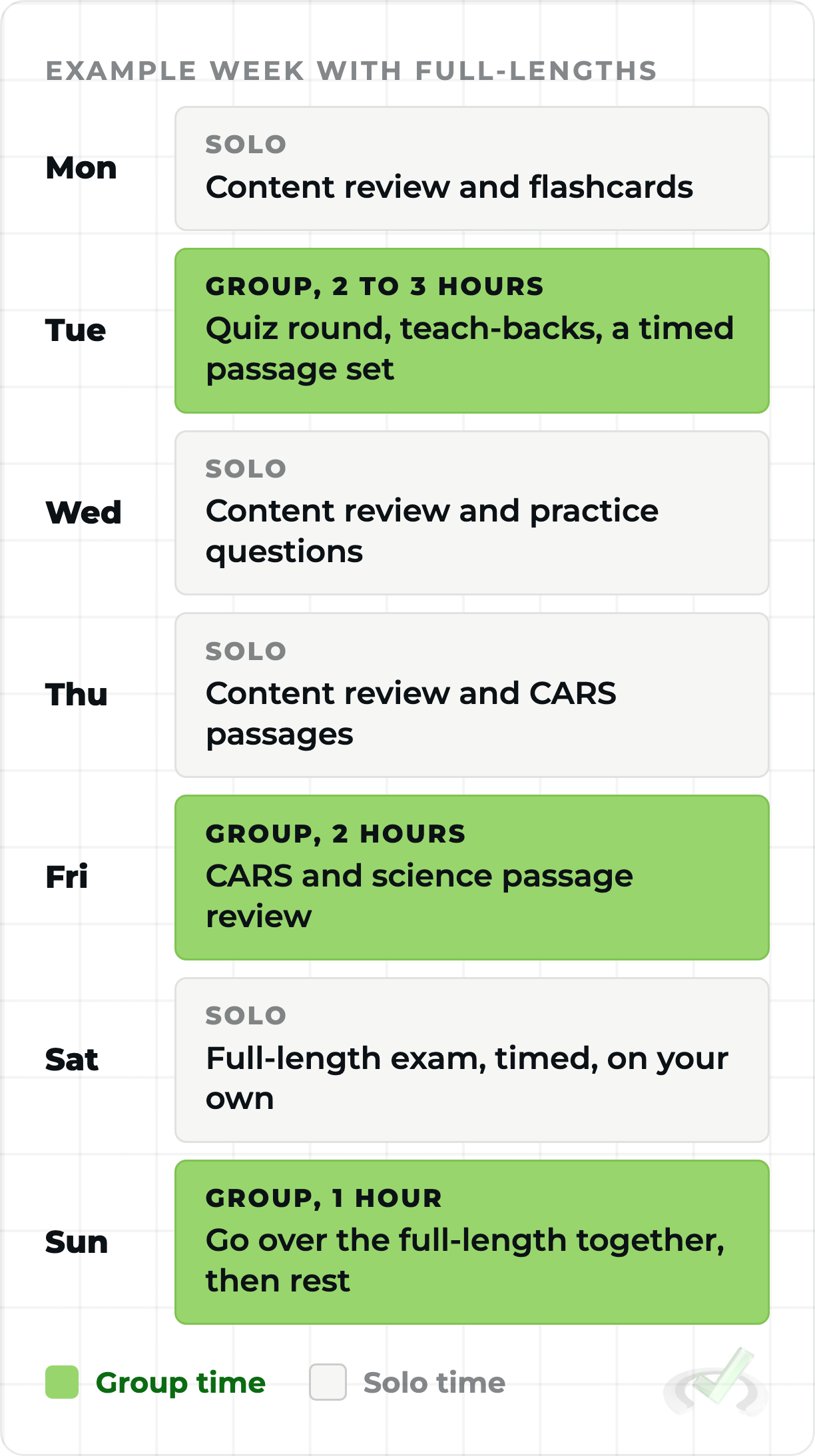
A Sample Weekly MCAT Study Group Session
Two or three sessions a week, two to three hours each, is a good starting point. Everything else stays on your own schedule.
Here's a 2.5-hour session you can copy, then adjust once you see what your group needs 🙂
How to Review CARS and Practice Passages as a Group
A group earns its time in passage review. You'll see three different readings of the same paragraph, and you'll have to defend yours 🙂
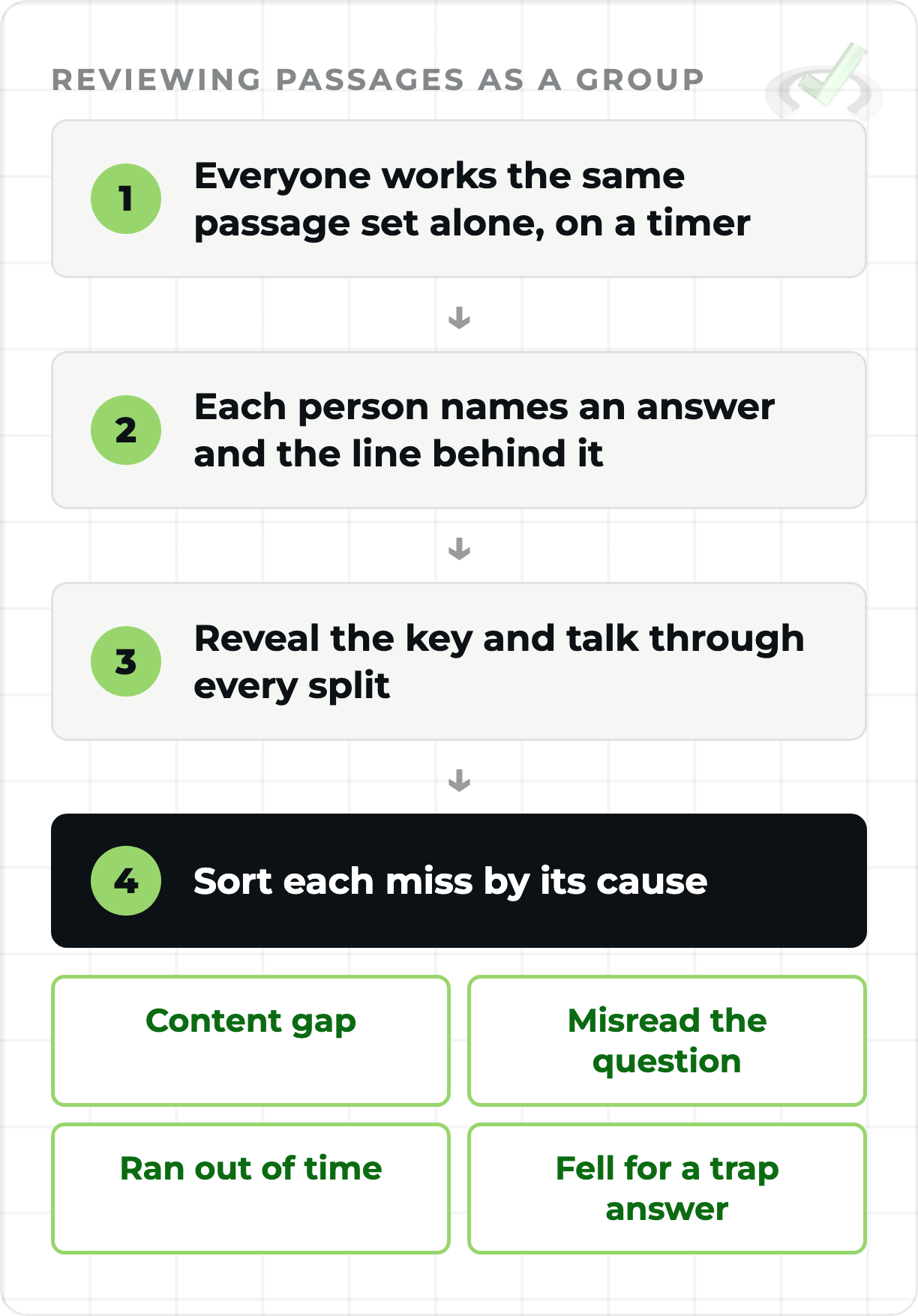
Start with everyone working the same set alone, on a timer, with no talking until the last person finishes. AAMC's CARS and science question packs, listed on the AAMC's official prep page, give everyone the same passages.
Before anyone sees the key, each person says their answer and points to the sentence that backs it. For CARS, have everyone write the author's main point in one sentence first, then compare.
Then reveal the key. Spend your time on the questions where people split, since those show how the question writer thinks. Those debates can get lively!
Last, sort every miss by cause, and log it. Our guides on how to review CARS passages and reviewing your MCAT mistakes walk through a mistake log you can share.
If an answer can't point to a line in the passage, it doesn't win the argument.
How to Keep an MCAT Study Group Accountable
- Post weekly goals by Sunday night. Topics, practice sets and any full-length, in the group chat.
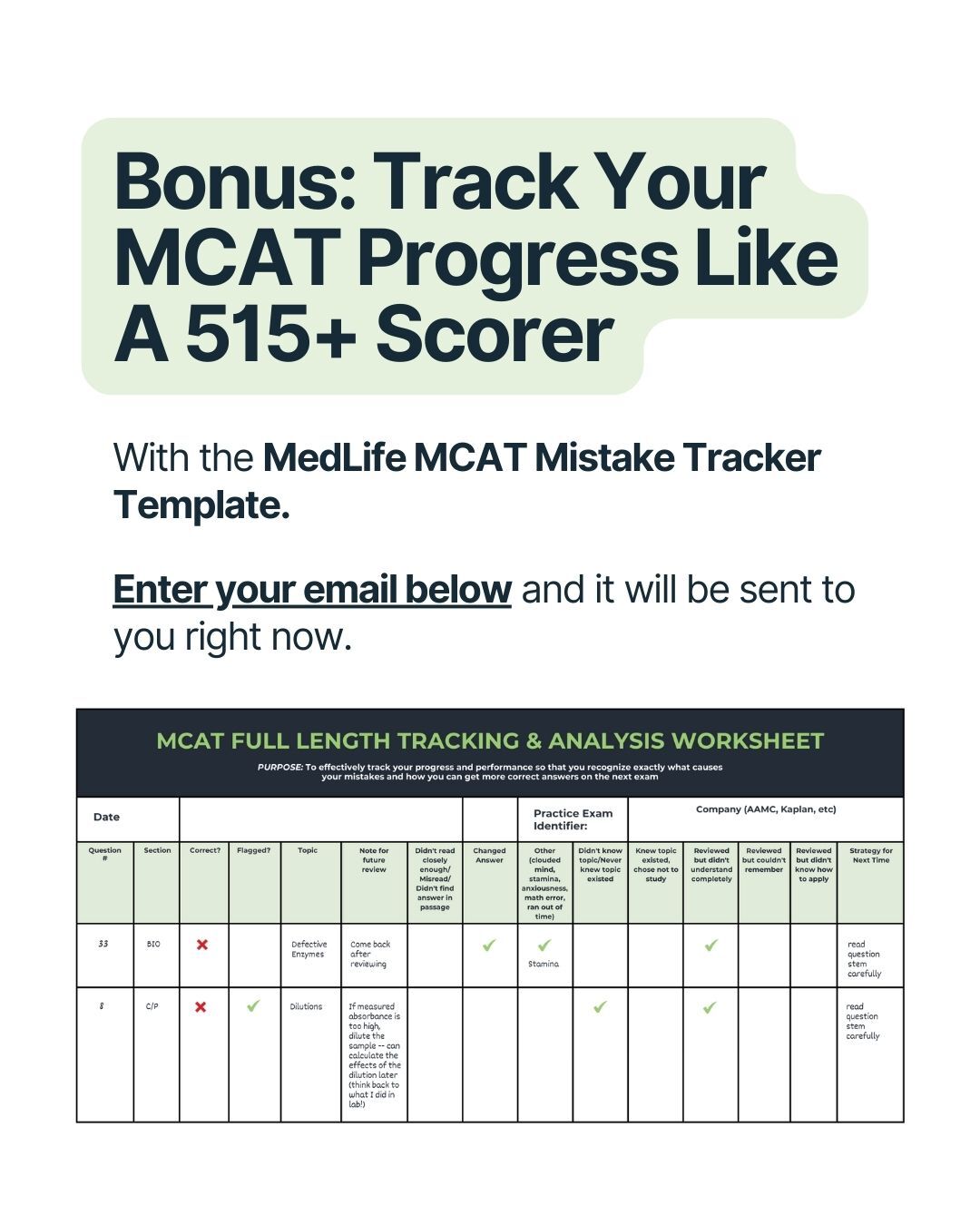
- Keep one shared tracker. A simple spreadsheet with each person's planned and finished work, plus a tab for the group calendar and the mistake log.
- Come prepared. Skim the topic before the session and bring the questions that stumped you, so group time goes to the hard parts.
- Review the plan every two weeks. If full-length scores aren't rising, change what you do in sessions.
- Celebrate small wins. A finished content unit or a better section score counts!
A target score gives the goals a point. If you're still setting yours, our guide to what makes a good MCAT score can help.
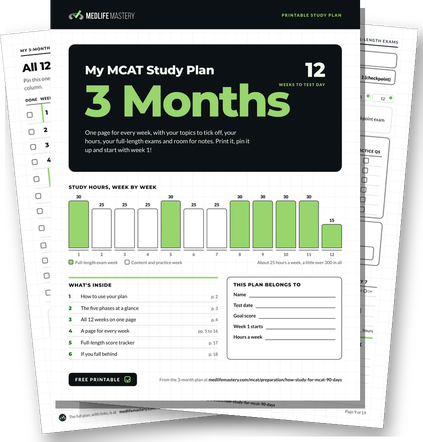
3-Month MCAT Study Plan
On its way.
Check your inbox in the next minute.
Warning Signs Your MCAT Study Group Isn't Working
- Sessions turn into venting or chatting, week after week
- One person does all the teaching
- Test dates have drifted months apart
- People keep showing up unprepared
- Group time is crowding out your own practice and full-lengths
- Comparing scores leaves you more anxious after each session
Raise it with the group first. Often a tighter agenda, a smaller group or fewer sessions fixes it, and the others are usually glad someone said it :)
MCAT Study Group FAQs
How many people should be in an MCAT study group?
Three or four. That's enough for the session to run when one person can't make it, and small enough that everyone teaches and gets quizzed.
How often should an MCAT study group meet?
Two or three times a week for two to three hours is a good starting point. Keep most of your hours for solo content review, practice questions and full-length exams!
Are online MCAT study groups as good as in-person ones?
They can be! Keep cameras on, use one call link and one chat, and follow the same agenda. Online groups also make it easier to find people testing the same month as you :)
Can I study for the MCAT with just one friend?
Yes, and a study partner works well for accountability and quizzing. Plan for the weeks one of you is sick or busy, since a pair stops when one person can't come. A third person helps a lot!
Where can I find MCAT study groups near me?
Ask your premed club or pre-health advisor, check with classmates and coworkers, and book a library study room. If nobody nearby is testing when you are, an online MCAT study group is the next best option.
A good MCAT study group can make the months of prep feel a lot less lonely, and you'll remember more of what you explain out loud :)
If you'd like the full plan for the exam itself, our guide on how to study for the MCAT covers every phase.
Our MCAT success stories show how other students got there, and our free MCAT resources are open to your whole group.
If you'd rather have a 515+ scorer in your corner too, our 1:1 MCAT tutoring can work alongside your group. You've got this!

 To help you achieve your goal MCAT score, we take turns hosting these